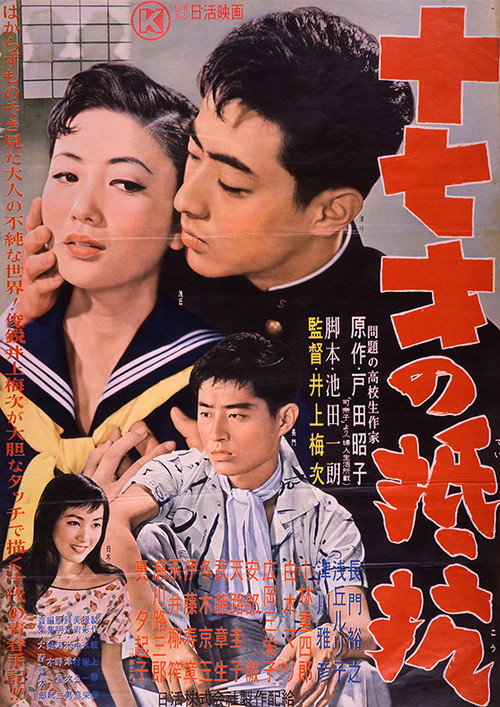
Jûnana-sai no teikô 1957
In Umetsugu Inoue's Jûnana-sai no teikô (1957), a delicate coming-of-age drama unfolds against the backdrop of post-war Japan.
Director: Umetsugu Inoue
Cast






Frequently Asked Questions
What is Jûnana-sai no teikô (1957) about?
Jûnana-sai no teikô follows Kanako, a bright high school student raised in a theatrical family, whose academic excellence masks a growing disillusionment with her upbringing. After a pivotal moment of defiance, she steps away from school, forcing her to confront her fractured past and the expectations tied to her future.
Who directed Jûnana-sai no teikô?
Umetsugu Inoue directed Jûnana-sai no teikô, a filmmaker known for blending melodrama with cultural and social themes.
Who stars in Jûnana-sai no teikô?
The film features Tōru Abe, Keiko Amaji, Makiko Aoi, Tomio Aoki, and Ruriko Asaoka among its cast.
Is Jûnana-sai no teikô (1957) worth watching?
While the film lacks an IMDb rating, its poignant exploration of family, tradition, and personal growth makes it a compelling watch for fans of character-driven dramas. The nuanced performances and atmospheric storytelling elevate its emotional resonance, offering a glimpse into the complexities of post-war Japanese society.
How long is Jûnana-sai no teikô?
Jûnana-sai no teikô runs for 101 minutes.
Jûnana-sai no teikô (1957): A Coming-of-Age Drama of Ambition and Loss — Full Movie Info
In Umetsugu Inoue's Jûnana-sai no teikô (1957), a delicate coming-of-age drama unfolds against the backdrop of post-war Japan. The film centers on Kanako, a gifted high school student raised solely by her father, Jusaburo, the proprietor of the Matsukawa troupe, who has shaped her life in the world of theater. Yet beneath her poised exterior lies a simmering restlessness—until the pressures of academia and the weight of unspoken family secrets push her to abandon school entirely. Her journey becomes a meditation on ambition, identity, and the burdens of growing up, as she grapples with the expectations placed upon her and the fractured realities of her past.
The atmosphere is one of quiet intensity, blending the vibrancy of traditional performance with the somber hues of personal struggle. As Kanako navigates her crumbling sense of stability, the film weaves themes of parental expectation, lost innocence, and the search for belonging. With its soulful storytelling and understated emotional depth, Jûnana-sai no teikô (1957) captures the universal tension between heritage and self-discovery.