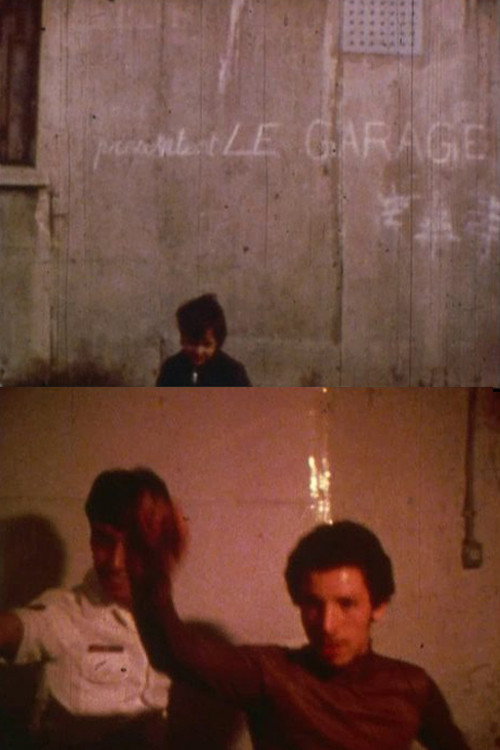
Le Garage 1979
Le Garage (1979) is a raw, politically charged short film born from the collective spirit of 1970s French suburban youth.
Director: Collectif Mohamed
Frequently Asked Questions
What is Le Garage (1979) about?
Le Garage (1979) follows a group of teenagers from Alfortville and Val-de-Marne who form Collectif Mohamed to challenge the narratives imposed on their communities. Through their short film, they explore the social and political realities of post-industrial French estates, turning personal frustration into a collective statement of resistance.
Who directed Le Garage?
Le Garage was directed by Collectif Mohamed, a collective of young filmmakers from Alfortville, Vitry-sur-Seine, and Val-de-Marne who sought to produce their own stories.
Who stars in Le Garage?
The cast of Le Garage (1979) includes the members of Collectif Mohamed, though individual names are not listed in available records.
Is Le Garage (1979) worth watching?
Le Garage (1979) is a fascinating historical artifact for fans of political cinema and underground filmmaking. Its 22-minute runtime and unpolished style may not appeal to all viewers, but its authenticity and cultural significance make it a compelling watch for those interested in 1970s French social movements.
How long is Le Garage?
Le Garage (1979) has a runtime of 22 minutes.
About Le Garage (1979) — A 22-Minute Manifesto of French Suburban Defiance
Le Garage (1979) is a raw, politically charged short film born from the collective spirit of 1970s French suburban youth. Created by Collectif Mohamed—a group of teenagers from Alfortville, Vitry-sur-Seine, and Val-de-Marne—the 22-minute work captures their urgent need to reclaim their own narratives. Against the backdrop of post-industrial estates, they challenge conventional storytelling by producing images and stories entirely their own, transforming personal revolt into a collective manifesto. The film pulses with the energy of grassroots activism, blending gritty realism with the unfiltered voices of a generation fighting to be seen.
This cinematic experiment is more than a film; it's a snapshot of youth asserting identity in a landscape often overlooked by mainstream media. Le Garage (1979) pulses with urgency, blending the raw visuals of suburban France with a soundtrack of defiance. By turning their cameras on their own communities, the filmmakers expose the tensions of their environment while forging a bold new language for political cinema—one that prioritizes authenticity over polished aesthetics.