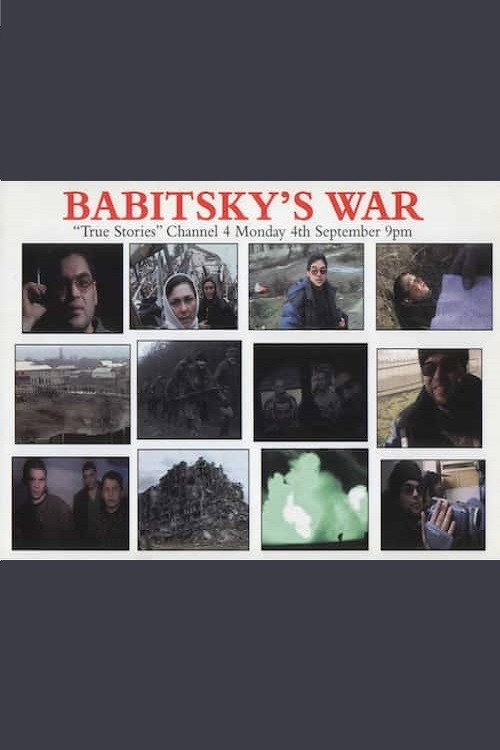
Babitsky's War 2000
Dive into the harrowing world of the Second Chechen War through the lens of war journalist Andrei Babitsky in *Babitsky's War* (2000), directed by Paul Yule.
Director: Paul Yule
Cast

Frequently Asked Questions
What is Babitsky's War (2000) about?
*Babitsky's War* follows journalist Andrei Babitsky as he documents the Second Chechen War, exposing the conflict's harsh realities through his firsthand experiences. The film blends his reports with archival footage, offering a raw and intimate look at war's human toll. It's a gripping exploration of journalism's role in wartime.
Who directed Babitsky's War?
Paul Yule directed *Babitsky's War*, crafting a documentary that balances urgency with deep human storytelling.
Who stars in Babitsky's War?
The documentary features narration by Alan Rickman, while journalist Andrei Babitsky plays a central role in the narrative.
Is Babitsky's War (2000) worth watching?
*Babitsky's War* is a compelling watch for those interested in war documentaries or modern history, offering a concise yet powerful perspective. While unrated on IMDb, its themes and execution make it a standout in the genre. Fans of investigative journalism will find it particularly resonant.
How long is Babitsky's War?
The documentary runs for 68 minutes.
About Babitsky's War (2000) — Second Chechen War Documentary Unveiled
Dive into the harrowing world of the Second Chechen War through the lens of war journalist Andrei Babitsky in *Babitsky's War* (2000), directed by Paul Yule. This gripping documentary immerses viewers in the frontlines, blending raw footage with Babitsky's unflinching coverage of the conflict's brutal realities. The film captures the chaos, moral dilemmas, and human cost of war, framed by a journalist's relentless pursuit of truth amid danger. With a runtime of just 68 minutes, *Babitsky's War* delivers a concise yet powerful exploration of journalism's role in documenting modern warfare, making it a must-watch for history buffs and documentary enthusiasts alike.
Alan Rickman's narration lends gravitas to the proceedings, anchoring the film's emotional weight and tonal intensity. The documentary's atmosphere is tense and immersive, drawing audiences into a conflict that often felt obscured from global scrutiny. As Babitsky's experiences unfold, the film becomes a testament to the power of independent journalism in the face of censorship and danger—an urgent, timely story that resonates even decades later.