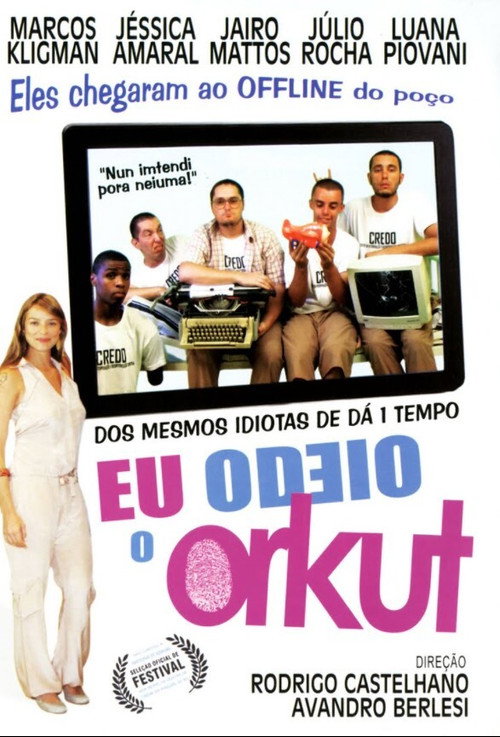
Eu Odeio o Orkut 2011
Eu Odeio o Orkut (2011) is a darkly comedic Brazilian film directed by Evandro Berlesi that explores our digital age obsession with social media through an unconventional narrative lens.
Director: Evandro Berlesi
Cast




Frequently Asked Questions
What is Eu Odeio o Orkut (2011) about?
The film follows Jader Bertola, a man in a detox clinic for virtual addiction, who shares his memories with a roommate to have his story told. It's a satirical exploration of social media dependency and digital identity.
Who directed Eu Odeio o Orkut?
The film was directed by Evandro Berlesi, who brings a distinctive Brazilian perspective to this dark comedy about virtual reality addiction.
Who stars in Eu Odeio o Orkut?
The cast includes Luana Piovani, Júlio Rocha, Jairo Mattos, Marcos Kligman, and Jerry Lucas in leading roles.
Is Eu Odeio o Orkut (2011) worth watching?
With its unique premise tackling social media addiction through dark comedy, this film offers fresh commentary on modern digital culture, making it worthwhile for fans of unconventional Brazilian cinema.
How long is Eu Odeio o Orkut?
The runtime is 129 minutes.
🎥 Trailer
Eu Odeio o Orkut (2011) — Virtual Addiction Comedy with Dark Brazilian Humor
Eu Odeio o Orkut (2011) is a darkly comedic Brazilian film directed by Evandro Berlesi that explores our digital age obsession with social media through an unconventional narrative lens. The story follows Jader Bertola, a man trapped in a virtual detox clinic who, during his final days, transfers his memories to a roommate tasked with documenting his life story. This surreal comedy blends satire with existential themes, examining how online personas can consume reality.
Starring Luana Piovani, Júlio Rocha, and Jairo Mattos, the film creates a unique atmosphere that balances absurd humor with genuine human emotion. At 129 minutes, Eu Odeio o Orkut takes audiences on a journey through virtual addiction and digital dependency, questioning what remains of our authentic selves when we're constantly connected. The movie's experimental approach to storytelling reflects Brazil's growing independent cinema scene, offering both entertainment and social commentary.