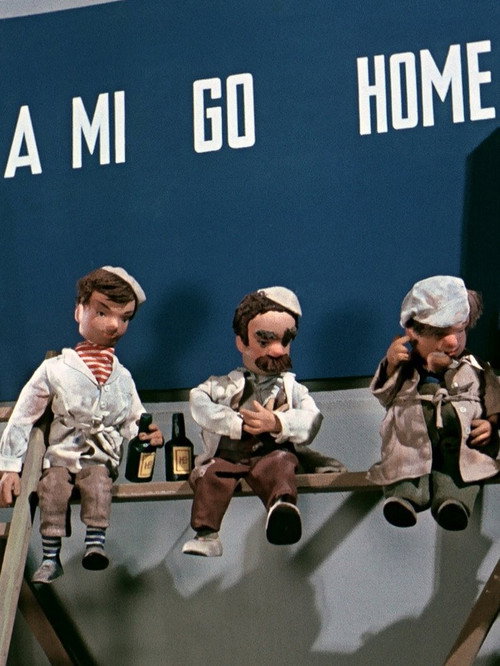
Blinder Alarm 1955
In the quirky 7-minute animated short *Blinder Alarm* (1955), directed by Johannes Hempel, a passerby stumbles upon what he believes is an anti-occupation protest slogan scrawled on a wall—"AMI GO HOME.
Director: Johannes Hempel
Frequently Asked Questions
What is Blinder Alarm (1955) about?
*Blinder Alarm* follows a passerby who misinterprets a painter's slogan as a political protest, leading to a chain of confusion with authorities. The short film uses this premise to poke fun at miscommunication and the fragility of perceived threats, all wrapped in the whimsical style of 1950s animation.
Who directed Blinder Alarm?
Director information is not available for Blinder Alarm (1955).
Who stars in Blinder Alarm?
The cast details for Blinder Alarm (1955) are not provided.
Is Blinder Alarm (1955) worth watching?
As a 7-minute animated short from 1955, *Blinder Alarm* offers a clever, satirical take on political paranoia and bureaucratic red tape. While its historical and cultural context may appeal to animation enthusiasts and history buffs, its brevity and unrated status make it a niche pick. Worth a watch for those who enjoy vintage shorts with bite.
How long is Blinder Alarm?
The runtime for Blinder Alarm (1955) is 7 minutes.
About Blinder Alarm (1955) — A Satirical 7-Minute Animation Classic
In the quirky 7-minute animated short *Blinder Alarm* (1955), directed by Johannes Hempel, a passerby stumbles upon what he believes is an anti-occupation protest slogan scrawled on a wall—"AMI GO HOME." To his dismay, the painters responsible for the artwork dismiss his concerns with laughter, insisting the phrase is merely part of their company name, Armin Gotzschome. When the frustrated citizen alerts the authorities, a tense standoff unfolds as police and occupying forces scrutinize the writing, only to find nothing incriminating. The short film cleverly blends satire with a lighthearted, almost whimsical tone, using its minimal runtime to deliver a pointed commentary on misinterpretation and bureaucratic blind spots. Set against a backdrop of post-war tension, it captures the absurdity of political paranoia through the lens of animation, where even the simplest brushstrokes can spark a crisis.
*Hempel's direction shines in this tight, witty exploration of perception versus reality*, where a single misread slogan becomes a catalyst for chaos. The film's charm lies in its understated approach, transforming an everyday scene into a microcosm of societal tension. With its sharp themes of authority, misunderstanding, and the power of perspective, *Blinder Alarm* (1955) remains a fascinating artifact of 1950s animation—short, punchy, and brimming with subtext.