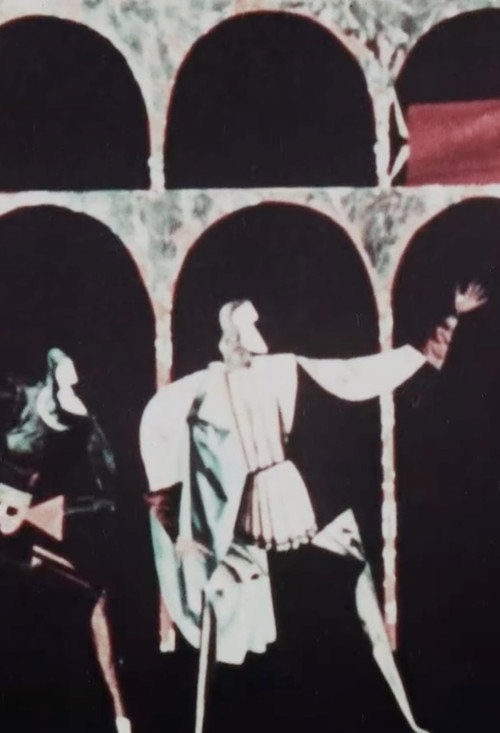
Othello-67 1967
Othello-67 (1967) is a groundbreaking animated short film by legendary Soviet director Fyodor Khitruk that distills Shakespeare's tragic masterpiece into a mere minute of screen time.
Director: Fyodor Khitruk
Frequently Asked Questions
What is Othello-67 (1967) about?
This animated short condenses Shakespeare's *Othello* into a single minute, following a driver who stumbles upon a roadside device projecting a condensed version of the tragedy. The film uses visual storytelling to explore themes of jealousy and moral decay in a modern context.
Who directed Othello-67?
Othello-67 was directed by Fyodor Khitruk, a pioneering Soviet animator known for his innovative and thought-provoking works.
Who stars in Othello-67?
Director information is not available.
Is Othello-67 (1967) worth watching?
While Othello-67 is a niche experimental film, its unique approach to Shakespeare's classic and its striking animation make it a fascinating watch for fans of avant-garde cinema. Its brevity and abstract style may not appeal to everyone, but it offers a fresh perspective on a timeless tragedy.
How long is Othello-67?
Othello-67 has a runtime of 1 minute.
About Othello-67 (1967) — A 1-Minute Ode to Shakespeare's Tragedy
Othello-67 (1967) is a groundbreaking animated short film by legendary Soviet director Fyodor Khitruk that distills Shakespeare's tragic masterpiece into a mere minute of screen time. This experimental adaptation transforms Othello's themes of jealousy, betrayal, and moral decay into a modern parable set against the backdrop of urban life.
The film follows a motorist at a traffic light who glimpses a roadside demonstration device—a portable 'movie comic'—that flashes a condensed, visually inventive retelling of Othello's tragic arc. With minimal dialogue and striking animation, Khitruk critiques how contemporary society trivializes profound cultural works, reducing them to fleeting, disposable entertainment. The result is a thought-provoking blend of classic literature and avant-garde animation, leaving viewers to ponder the erosion of artistic depth in the digital age.