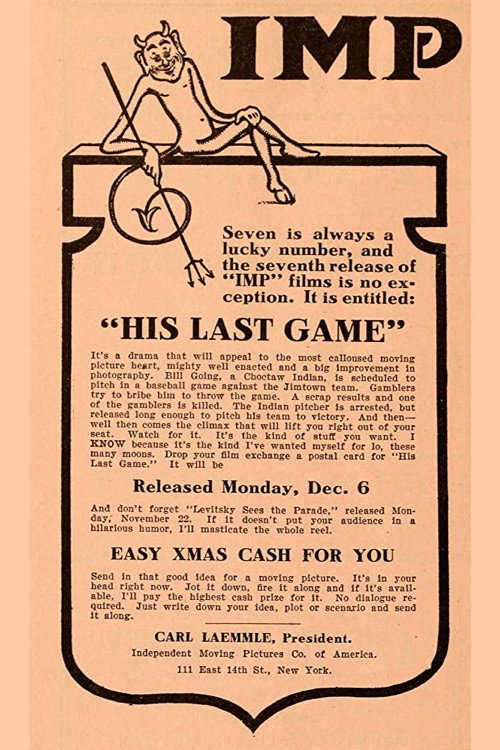
His Last Game 1909
Step into the dusty streets of 1909 with *His Last Game*, a short but intense Western that pits baseball against raw frontier justice.
Frequently Asked Questions
What is His Last Game (1909) about?
The film follows Bill Going, a star pitcher for a Choctaw baseball team, who is drawn into a violent confrontation with gamblers attempting to fix a crucial game. After defending himself, he's granted a final chance to pitch—but only if he secures justice in the process.
Who directed His Last Game?
Director information for *His Last Game* is not available, as it was produced in the silent era when credits were often omitted.
Who stars in His Last Game?
The cast of *His Last Game* remains uncredited, reflecting the common practice of early cinema where performers were often anonymous.
Is His Last Game (1909) worth watching?
Though unrated and dated, *His Last Game* is a fascinating artifact of early Western cinema, offering a snapshot of 1909 storytelling and moral dilemmas. Its short runtime and historical significance may appeal to silent film enthusiasts and fans of vintage Westerns.
How long is His Last Game?
The runtime of *His Last Game* is listed as 12 minutes.
🎥 Trailer
About His Last Game (1909) — A Forgotten 1909 Western Short Steeped in Baseball and Revenge
Step into the dusty streets of 1909 with *His Last Game*, a short but intense Western that pits baseball against raw frontier justice. Bill Going, the ace pitcher for a Choctaw community team, finds himself at the center of a deadly gamble when gamblers from Jimtown try to rig the final game of the season. When threats escalate into violence, Bill's quick temper leads to a fateful confrontation, leaving him with a suspended sentence—but only if he pitches one last game to decide the year's outcome. This silent-era short film blends the crack of the bat with the tension of early American life, creating a gripping tale of honor, revenge, and the blurred lines between right and wrong.
As a surviving fragment of early cinema, *His Last Game (1909)* offers a rare glimpse into how storytelling evolved from stage-like simplicity to cinematic innovation. While its runtime is brief, the film's themes resonate with the moral complexities of its time, including the pressures of gambling, the weight of responsibility, and the fragility of justice. Shot in the era before synchronized sound, its visual storytelling relies on expressive performances and a keen sense of atmosphere, immersing viewers in the bygone world of early Western lore.