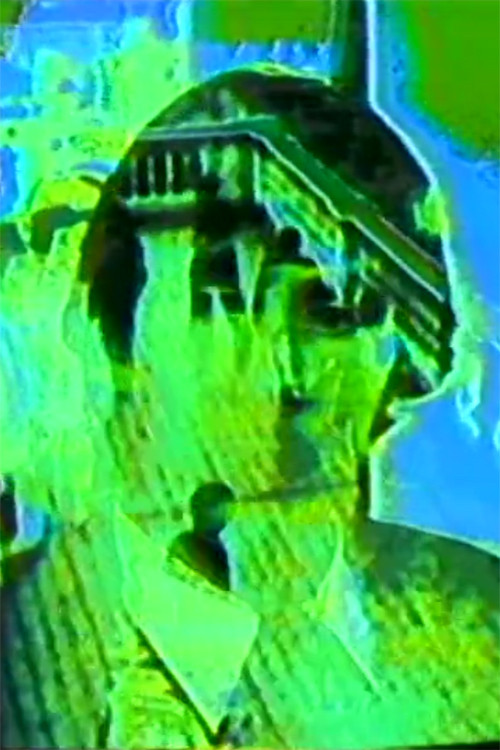
Anti-City: For Johannes Baader 1984
Dive into the hypnotic world of *Anti-City: For Johannes Baader* (1984), a 14-minute experimental masterpiece directed by Hans Breder that transforms television footage into a mesmerizing cultural critique.
Director: Hans Breder
Frequently Asked Questions
What is Anti-City: For Johannes Baader (1984) about?
This experimental short film by Hans Breder dissects the urban and human experience through a kaleidoscope of television imagery. It stitches together disjointed visuals of cities and people, creating a layered critique of modern media and culture.
Who directed Anti-City: For Johannes Baader?
The film was directed by Hans Breder, a visionary artist known for pushing the boundaries of experimental cinema.
Who stars in Anti-City: For Johannes Baader?
Cast information is not available for this experimental work.
Is Anti-City: For Johannes Baader (1984) worth watching?
While niche, *Anti-City* (1984) offers a unique, thought-provoking experience for fans of avant-garde cinema. Its experimental nature demands an open mind, but its bold visual storytelling rewards those who seek unconventional art.
How long is Anti-City: For Johannes Baader?
The runtime is 14 minutes.
About Anti-City: For Johannes Baader (1984) — A 14-Minute Experimental Collage of Urban Life
Dive into the hypnotic world of *Anti-City: For Johannes Baader* (1984), a 14-minute experimental masterpiece directed by Hans Breder that transforms television footage into a mesmerizing cultural critique. This avant-garde collage shatters conventional filmmaking, weaving together fragmented images of urban landscapes, fleeting human moments, and chaotic snippets of televised life into a prismatic experience. Breder's vision blurs the lines between architecture and humanity, challenging viewers to decode layers of meaning in a constantly shifting visual narrative. The film's raw, ephemeral energy mirrors the entropy of modern media, inviting participation in its interpretation rather than passive observation.
Bridging art and critique, *Anti-City* (1984) strips away traditional storytelling to expose the raw, often disjointed pulse of contemporary culture. Hans Breder's experimental lens captures the built environment and its inhabitants in a state of flux, where time and geography dissolve into a single, dynamic tableau. The result is a work that feels both deeply personal and universally resonant—a fleeting yet potent reflection on the chaos and beauty of the world as seen through the lens of television.