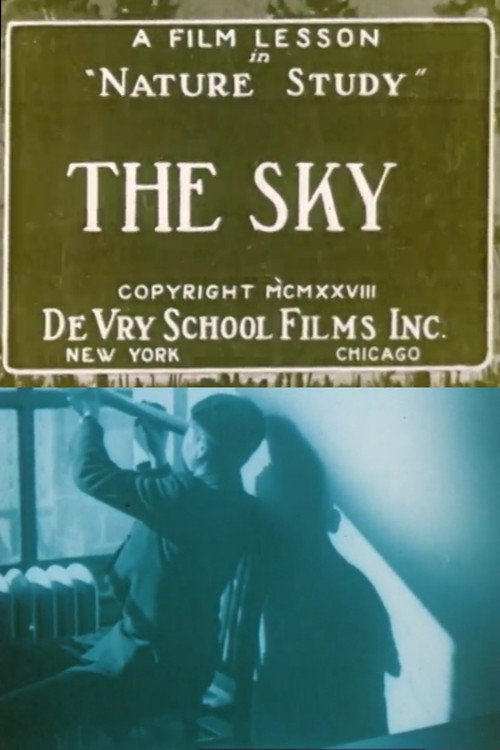
The Sky: A Film Lesson in "Nature Study" 1928
The Sky: A Film Lesson in "Nature Study" (1928) stands as a fascinating early documentary that takes viewers on a journey through Earth's atmospheric realm.
Frequently Asked Questions
What is The Sky: A Film Lesson in "Nature Study" (1928) about?
This early documentary examines Earth's atmosphere and humanity's impact on it, while following a young boy's journey learning to build a telescope. The second half features an imaginative aircraft voyage to the moon, blending scientific education with creative storytelling.
Who directed The Sky: A Film Lesson in "Nature Study"?
Director information is not available.
Who stars in The Sky: A Film Lesson in "Nature Study"?
The main cast is not documented, though the film features a young boy as its primary focus alongside scientific presenters typical of educational films from this era.
Is The Sky: A Film Lesson in "Nature Study" (1928) worth watching?
As an unrated early documentary, it holds historical value for film enthusiasts and those interested in vintage educational content. Its short runtime and unique themes make it worth exploring for its historical significance alone.
How long is The Sky: A Film Lesson in "Nature Study"?
The film runs for 18 minutes.
About The Sky: A Film Lesson in "Nature Study" (1928) — Early Documentary on Atmospheric Science
The Sky: A Film Lesson in "Nature Study" (1928) stands as a fascinating early documentary that takes viewers on a journey through Earth's atmospheric realm. This 18-minute educational film explores the delicate relationship between our planet and the heavens above, examining how human activities impact the air we breathe. Shot during an era when scientific filmmaking was in its infancy, the documentary combines practical science with wonder, showing how even small actions can influence the vast skies that surround us.
A significant portion follows a young boy as he learns to construct a refractive telescope, representing the curiosity and hands-on education that defined early 20th-century nature study programs. The film culminates in an imaginative sequence where an aircraft embarks on a fantastical voyage to the moon, blending scientific fact with creative speculation. Though director and cast details remain lost to history, this documentary offers a unique window into 1920s scientific pedagogy and environmental awareness.
The short runtime makes it an accessible piece for anyone interested in vintage educational cinema or the history of documentary filmmaking. Its themes of atmospheric science, youth education, and cosmic exploration remain relevant today, offering modern audiences a charming glimpse into early scientific filmmaking techniques.