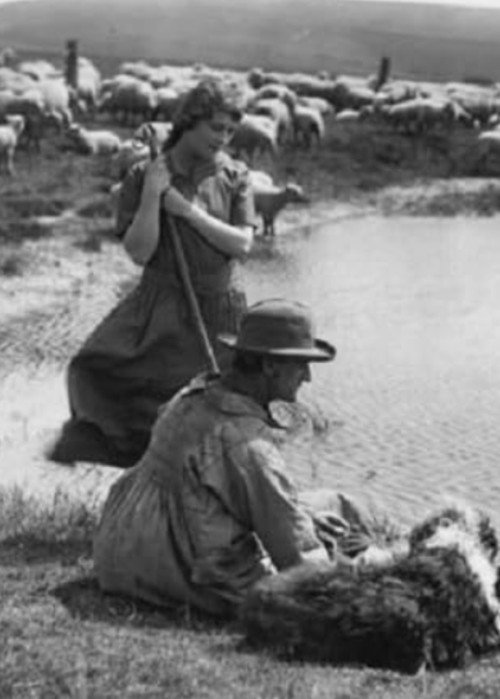
Tansy 1921
In the pastoral beauty of 1920s Devon, a poignant drama unfolds as two farming brothers open their hearts—and their home—to a young shepherdess cast out of her community under the shadow of moral suspicion. Tansy (1921), helmed by the visionary Cecil M.
Director: Cecil M. Hepworth
Cast

Frequently Asked Questions
What is Tansy (1921) about?
Tansy tells the story of a young shepherdess cruelly evicted from her community due to unfounded moral accusations. She finds refuge with two farming brothers in Devon, where she must rebuild her life amid lingering stigma and newfound hope.
Who directed Tansy?
Tansy was directed by Cecil M. Hepworth, a pioneering figure in early British cinema known for his emotionally rich storytelling and technical innovations.
Who stars in Tansy?
The film features Alma Taylor in the lead role, supported by Gerald Ames, James Carew, Hugh Clifton, and George Dewhurst.
Is Tansy (1921) worth watching?
Though unrated on IMDb, Tansy offers a compelling snapshot of early 20th-century British life, blending romance and social drama. Its quiet emotional depth and historical significance make it a rewarding watch for silent film enthusiasts and fans of character-driven narratives.
How long is Tansy?
Tansy runs for 63 minutes, a concise runtime that keeps the story focused and engaging.
About Tansy (1921) — Early British Drama of Innocence and Prejudice
In the pastoral beauty of 1920s Devon, a poignant drama unfolds as two farming brothers open their hearts—and their home—to a young shepherdess cast out of her community under the shadow of moral suspicion. Tansy (1921), helmed by the visionary Cecil M. Hepworth, blends romance and social commentary against the rugged backdrop of the English countryside. Alma Taylor delivers a heartfelt performance as the titular Tansy, whose resilience is tested as she navigates prejudice and finds unlikely sanctuary with the compassionate brothers, portrayed with warmth by Gerald Ames and James Carew. The film's quiet intensity lingers as it explores themes of innocence, judgment, and the quiet strength of human kindness.
Draped in the nostalgic charm of early British cinema, Tansy captures a moment where rural life moves at a slower, more deliberate pace. Hepworth's direction infuses the story with a naturalistic tone, emphasizing emotional authenticity over spectacle. While the plot unfolds simply, its resonance lies in the quiet moments—the shared silences between characters, the unspoken understanding, and the bittersweet hope that redemption might still be within reach.