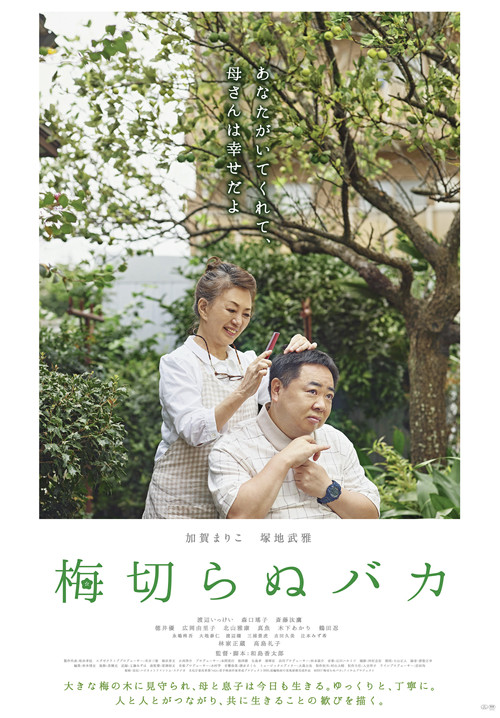
The Lone Ume Tree 2021
Kotaro Wajima's intimate 2021 drama, *The Lone Ume Tree*, unfolds against a quiet urban backdrop where an aging house stands as a solitary relic amidst modern progress.
Director: Kotaro Wajima
Cast







Frequently Asked Questions
What is The Lone Ume Tree (2021) about?
The film follows Tamako, a fortune teller, and her adult son Tadao, who has intellectual disability and autism, as they navigate a world that doesn't always understand them. When a new group home becomes available, Tamako must decide whether to let go of their quiet life together or risk everything for a chance at greater support.
Who directed The Lone Ume Tree?
Kotaro Wajima directed *The Lone Ume Tree*. Known for his sensitive storytelling and humanistic approach to drama, Wajima crafts a deeply emotional narrative rooted in real-life experiences.
Who stars in The Lone Ume Tree?
The film features Mariko Kaga as Tamako, Muga Tsukaji as Tadao, and supporting roles from Ikkei Watanabe, Yōko Moriguchi, and Hayashiya Shōzō IX.
Is The Lone Ume Tree (2021) worth watching?
*The Lone Ume Tree* is a beautifully understated drama that offers a rare glimpse into the lives of families navigating intellectual disabilities with quiet strength. While it lacks mainstream recognition, its emotional honesty and gentle pacing make it a moving experience for viewers open to intimate, character-driven storytelling.
How long is The Lone Ume Tree?
The runtime of *The Lone Ume Tree* is 77 minutes.
About The Lone Ume Tree (2021) — A poignant drama of family, change, and unconditional love
Kotaro Wajima's intimate 2021 drama, *The Lone Ume Tree*, unfolds against a quiet urban backdrop where an aging house stands as a solitary relic amidst modern progress. Within its walls, Tamako, a respected fortune teller, has built a quiet life with her adult son Tadao, whose intellectual disability and autism shape their daily rhythm. Their fragile peace is disrupted by neighbors' complaints over Tadao's unpredictable bursts of behavior—unexpected outbursts, moments of joy, bursts of frustration. When Tamako learns of a group home opening nearby—one designed for people with similar conditions—she faces a heart-wrenching choice: remain in the place they know or take a step toward a life that might offer more support, even if it tears at their bond.
Wajima crafts a tender, quietly powerful portrait of love, resilience, and the quiet battles families face when society's expectations clash with unconditional devotion. Shot with a gentle realism, the film lingers on small moments—the flicker of a candle during a reading, the rustle of leaves outside their old house—that carry the weight of memory and change. It's a story about what it means to belong, not just in the world, but in the heart of someone who chooses you, unconditionally.
*The Lone Ume Tree (2021)* explores themes of inclusion, family sacrifice, and the quiet courage it takes to care for someone whose needs the world often overlooks.