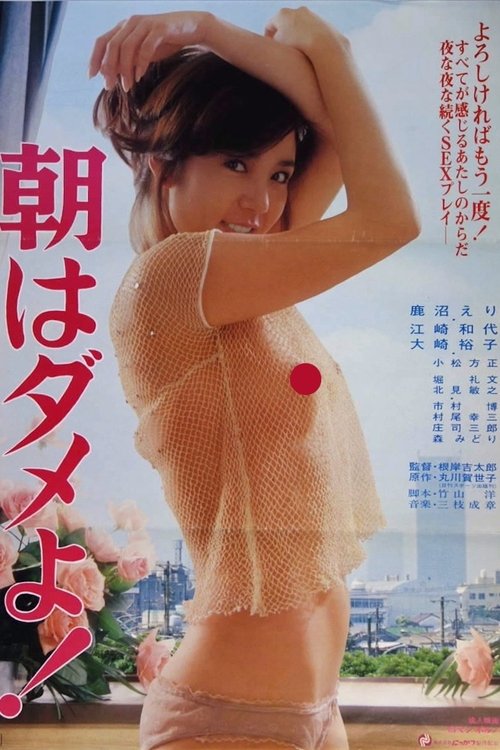
Never in the Morning! 1980
In *Never in the Morning! (1980)*, Japanese director Kichitaro Negishi crafts a sharp comedy-drama that explores the boundaries between desire and fulfillment.
Director: Kichitaro Negishi
Cast






Frequently Asked Questions
What is Never in the Morning! (1980) about?
This 1980 Japanese comedy-drama follows a spirited woman who enters into a contract with her employer to become his mistress, only to find his offerings lack the fulfillment she craves. The story unfolds as she grapples with the emotional and practical consequences of her decision.
Who directed Never in the Morning!?
Never in the Morning! was directed by Kichitaro Negishi, known for his work in Japanese cinema that blends humor with social commentary.
Who stars in Never in the Morning!?
The film features Eri Kanuma, Kazuyo Ezaki, Rebun Hori, Hiroshi Ichimura, and Toshiyuki Kitami in key roles.
Is Never in the Morning! (1980) worth watching?
While *Never in the Morning!* isn't widely rated, its blend of comedy and drama, along with its concise runtime, makes it a compelling watch for fans of 1980s Japanese films. The themes of independence and self-worth give it depth beyond its lighthearted premise.
How long is Never in the Morning!?
The film runs for 69 minutes.
About Never in the Morning! (1980) — A Comedy-Drama About Desire and Disillusionment
In *Never in the Morning! (1980)*, Japanese director Kichitaro Negishi crafts a sharp comedy-drama that explores the boundaries between desire and fulfillment. The story follows a vibrant, independent woman who makes an unconventional deal with her boss, only to realize his promises fall short of her expectations. As she navigates the complexities of modern relationships, the film blends humor with poignant moments, revealing the disconnect between appearances and reality. With its breezy runtime and engaging performances, this 69-minute gem captures the essence of 1980s Japanese cinema—bold, unapologetic, and deeply human.
Negishi's direction, paired with a standout cast including Eri Kanuma, Kazuyo Ezaki, and Hiroshi Ichimura, creates a world where freedom and compromise collide. The film's themes of self-discovery and the pursuit of satisfaction resonate as strongly today as they did in 1980, making it a cult favorite for fans of introspective yet entertaining storytelling.