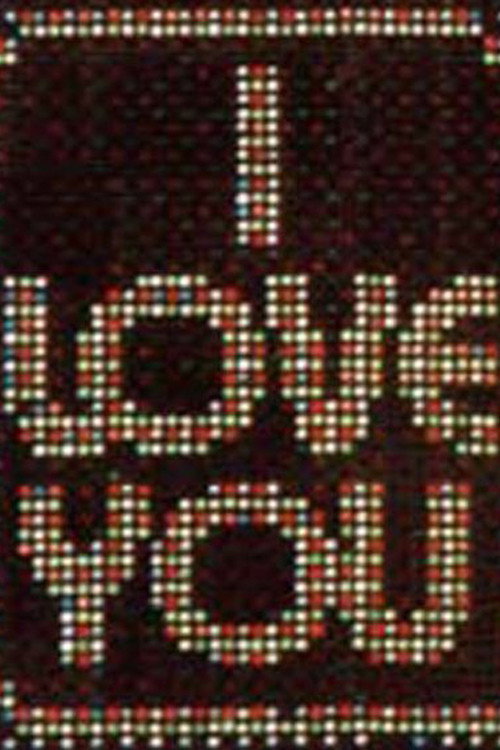
I Love You 1993
Paul Wong's *I Love You* (1993) is a striking one-minute animated short created for Vancouver's spectra-board urban screen at BC Place Stadium.
Director: Paul Wong
Frequently Asked Questions
What is I Love You (1993) about?
*I Love You* (1993) was a site-specific animated art piece created for Vancouver's public urban screen as part of a Day Without Art event. The one-minute film used light, color, and multilingual text to convey a message of love and awareness during AIDS Awareness Day.
Who directed I Love You?
The short was directed by Paul Wong, a noted experimental filmmaker whose work often explores social and cultural themes through innovative visual techniques.
Who stars in I Love You?
Cast details are not listed, as *I Love You* (1993) is primarily a visual and conceptual art piece rather than a traditional narrative film.
Is I Love You (1993) worth watching?
*I Love You* (1993) may not be a mainstream choice, but its historical and cultural significance as an AIDS awareness project makes it a compelling watch for fans of experimental animation and public art. Its brevity and emotional resonance offer a unique viewing experience.
How long is I Love You?
The runtime is 1 minute.
About I Love You (1993) — A 1-Minute Animated Tribute to AIDS Awareness
Paul Wong's *I Love You* (1993) is a striking one-minute animated short created for Vancouver's spectra-board urban screen at BC Place Stadium. Part of the *Day Without Art* initiative, curated by Scott Watson, the project coincided with AIDS Awareness Day on December 1, 1993, serving as a poignant visual statement. Visible from bridges and streets downtown, the work unfolded in English, French, Chinese, and Coast-Salish—reflecting the city's linguistic diversity while delivering a powerful, concise message of love and solidarity.
The minimalist yet evocative animation stands out in animation history for its brevity and impact. Set against Vancouver's urban landscape, the piece merged public art with activism, using light and color to evoke emotion without dialogue. Its four-language presentation underscored inclusivity, making it both a cultural artifact and a moment of collective reflection amid a global health crisis.