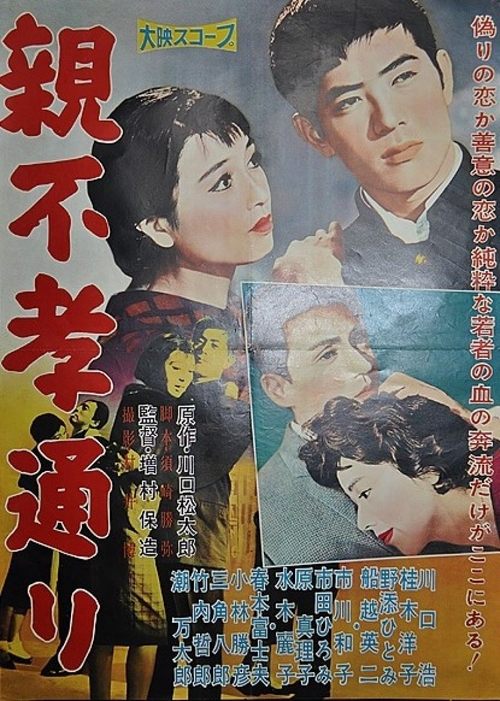
Disobedience 1958
In 1950s Japan, a dark tale of vengeance unfolds in Disobedience (1958), a gripping drama directed by the acclaimed Yasuzō Masumura. The film follows a university student consumed by anger and a desire for revenge against a businessman who abandoned his pregnant sister.
Director: Yasuzō Masumura
Cast
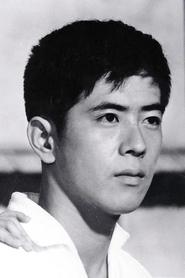
Hiroshi Kawaguchi
Katsuya Sotozaki

Yōko Katsuragi
Akie Sotozaki

Hitomi Nozoe
Kaneko Ema
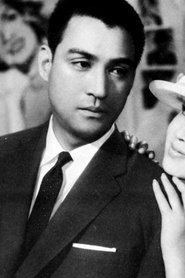
Eiji Funakoshi
Shuichi Ema

Katsuhiko Kobayashi
Yamaguchi
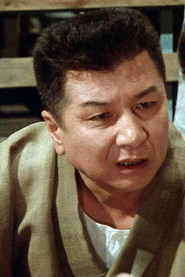
Mantarō Ushio
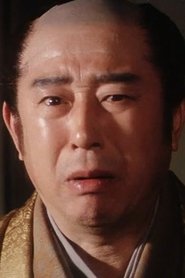
Fujio Harumoto

Hiromi Ichida
Katsuhiko Kobayashi
Hachiro Misumi
Frequently Asked Questions
What is Disobedience (1958) about?
The film follows a university student consumed by anger and a desire for revenge against a businessman who abandoned his pregnant sister, leading him to seduce the man's sister to make him suffer the same fate.
Who directed Disobedience?
The acclaimed Yasuzō Masumura directed this gripping drama.
Who stars in Disobedience?
The film features a talented cast, including Hiroshi Kawaguchi and Yōko Katsuragi.
Is Disobedience (1958) worth watching?
While the film's low IMDb rating may deter some viewers, its thought-provoking themes and atmospheric storytelling make it a compelling watch for fans of Japanese cinema and drama enthusiasts.
How long is Disobedience?
The film has a runtime of 80 minutes.
About Disobedience (1958) — A Gripping Tale of Vengeance and Redemption in 1950s Japan
In 1950s Japan, a dark tale of vengeance unfolds in Disobedience (1958), a gripping drama directed by the acclaimed Yasuzō Masumura. The film follows a university student consumed by anger and a desire for revenge against a businessman who abandoned his pregnant sister. His plan of seduction is a twisted attempt to make the man suffer the same fate. As the narrative unfolds, themes of family, morality, and the complexities of human relationships come to the forefront. Set against a backdrop of social change and upheaval, Disobedience (1958) is a thought-provoking exploration of the human condition. With a talented cast, including Hiroshi Kawaguchi and Yōko Katsuragi, this film is a must-watch for fans of Japanese cinema and those interested in the drama genre.
Disobedience (1958) is a masterclass in atmospheric storytelling, weaving a complex web of emotions and motivations that keep viewers engaged until the very end. The film's exploration of family dynamics and the consequences of one's actions adds depth and nuance to the narrative, making it a compelling watch. As the story unfolds, themes of love, betrayal, and redemption come to the forefront, leaving viewers with a lasting impression.
Overall, Disobedience (1958) is a hidden gem of Japanese cinema that deserves attention from film enthusiasts and drama fans alike. With its thought-provoking themes and atmospheric storytelling, this film is a must-watch for anyone interested in exploring the complexities of the human experience.