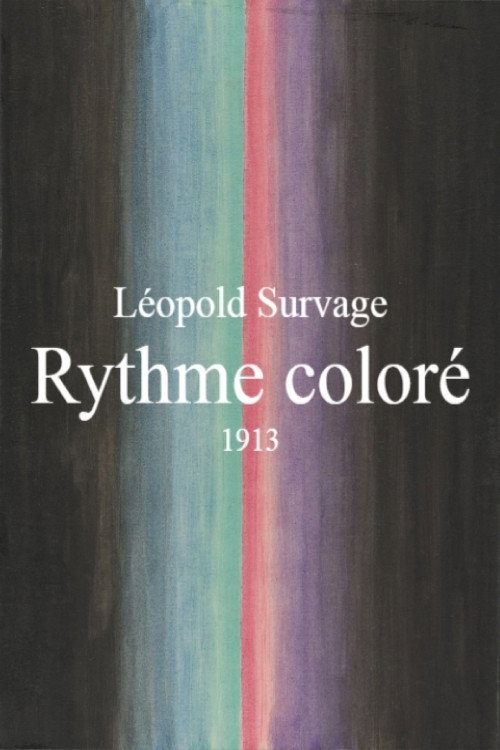
Colored Rhythm: Study for the Film 1913
Léopold Survage's *Colored Rhythm: Study for the Film* (1913) remains one of cinema's most tantalizing 'what ifs'—a visionary experiment that never fully materialized.
Director: Léopold Survage
Frequently Asked Questions
What is Colored Rhythm: Study for the Film (1913) about?
This short film is a conceptual exploration of abstract visual music, where Léopold Survage's watercolor designs were intended to translate into flowing, rhythmic motion on screen. Though the project was never completed due to technological and historical constraints, later recreations attempt to capture its intended hypnotic, kaleidoscopic effect.
Who directed Colored Rhythm: Study for the Film?
The film was directed by Léopold Survage, a Russian-French painter and theorist whose innovative ideas pushed the boundaries of early animation and abstract art.
Who stars in Colored Rhythm: Study for the Film?
Director information is not available.
Is Colored Rhythm: Study for the Film (1913) worth watching?
As a historical artifact, it's fascinating for fans of early animation and avant-garde art, offering a rare glimpse into what could have been a groundbreaking work. While not a traditional narrative film, its reconstructed versions provide a mesmerizing visual experience that feels ahead of its time.
How long is Colored Rhythm: Study for the Film?
Runtime details are not listed.
About Colored Rhythm: Study for the Film (1913) — The Pioneering Animation That Almost Was
Léopold Survage's *Colored Rhythm: Study for the Film* (1913) remains one of cinema's most tantalizing 'what ifs'—a visionary experiment that never fully materialized. The French painter and theorist dreamed of blending luminous, abstract watercolors with the kinetic energy of early animation, crafting a visual symphony of color and motion long before technology could catch up. His bold concept, rooted in the avant-garde spirit of the era, was tragically cut short by the outbreak of World War I, leaving his dream unrealized. Decades later, modern animators have attempted to breathe life into his static plates, offering glimpses of what might have been—a dazzling fusion of art and cinema that predated even the most experimental movements.
This lost gem of early animation holds a unique place in film history, not as a completed work, but as a testament to Survage's audacious imagination. His 'colored rhythms'—vibrant, flowing abstractions—were meant to pulse in time with music, creating an immersive sensory experience. Though the original film never came to fruition, the fragments that survive or have been reconstructed today evoke a hypnotic, almost futuristic atmosphere. A time capsule of early 20th-century innovation, *Colored Rhythm* invites viewers to wonder what cinema might have looked like had Survage's pioneering ideas taken full flight.