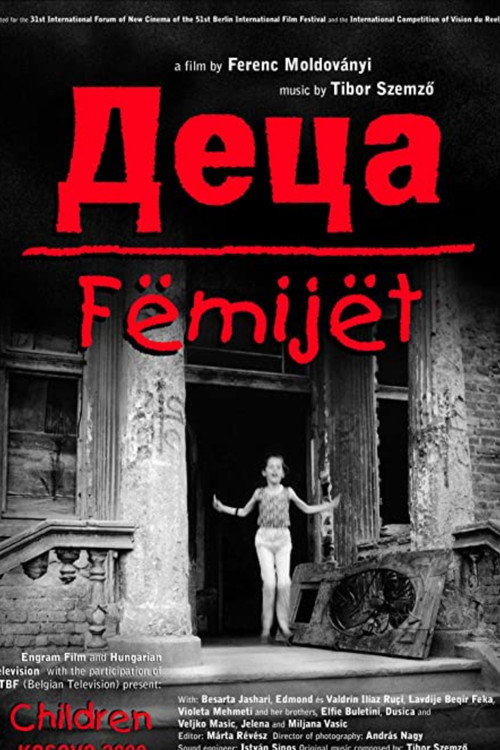
Deza-Femijet (Kosovo 2000) 2001
Step into the heart of Kosovo's fragile spring in 2000 with Ferenc Moldoványi's haunting documentary *Deza-Femijet (Kosovo 2000)* (2001).
Director: Ferenc Moldoványi
Frequently Asked Questions
What is *Deza-Femijet (Kosovo 2000)* (2001) about?
*Deza-Femijet* plunges into the uneasy calm of post-war Kosovo in 2000, where the physical landscape begins to soften but emotional scars remain raw. Through poetic visuals and unspoken pain, the film follows the hesitant steps of children caught between trauma and the fragile idea of a new beginning.
Who directed *Deza-Femijet (Kosovo 2000)*?
The film was directed by Ferenc Moldoványi, whose sensitive lens transforms the documentary into a poignant exploration of memory and healing.
Who stars in *Deza-Femijet (Kosovo 2000)*?
Director information is not available.
Is *Deza-Femijet (Kosovo 2000)* (2001) worth watching?
Though unrated on IMDb, this documentary stands as a powerful, visually striking account of post-conflict resilience. Its poetic approach to trauma and renewal makes it essential viewing for those interested in the human stories behind geopolitical upheaval.
How long is *Deza-Femijet (Kosovo 2000)*?
The film runs for 90 minutes.
About Deza-Femijet (Kosovo 2000) (2001) — A haunting documentary on war's lingering wounds and childhood resilience
Step into the heart of Kosovo's fragile spring in 2000 with Ferenc Moldoványi's haunting documentary *Deza-Femijet (Kosovo 2000)* (2001). Shot through with stark black-and-white visuals softened by fleeting bursts of color, this 90-minute film captures the paradox of a landscape healing yet forever scarred by war. Through lingering frames and quiet gestures, it bears witness to the silent suffering of children—Albanian and Serb—who embody innocence amid chaos. The title itself, weaving together the words for "children" in two languages, underscores the tragedy of division, while the director's unflinching lens reveals wounds that time cannot erase.
This is not just a chronicle of ruins; it is a meditation on resilience and the fragile promise of renewal. Moldoványi juxtaposes the beauty of Kosovo's scenery against the harsh reality of its recent past, using broken imagery and memory to frame a story where hope feels tentative, almost reluctant. A poetic yet devastating portrait of post-conflict life, *Deza-Femijet (Kosovo 2000)* (2001) challenges viewers to confront the cost of war through the eyes of its most vulnerable survivors.