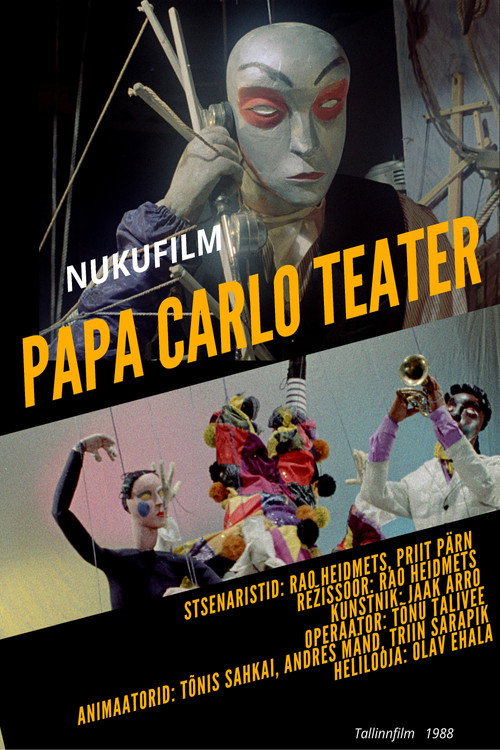
Theatre Papa Carlo 1988
Step into the haunting world of *Theatre Papa Carlo (1988)*, Rao Heidmets' chilling animated short that distills the tension of a society on the brink of collapse.
Director: Rao Heidmets
Frequently Asked Questions
What is Theatre Papa Carlo (1988) about?
This animated short follows the final stand of a theater owner, papa Carlo, against a totalitarian regime. His defiance becomes the catalyst for a rebellion, as the oppressed masses surge past him toward freedom.
Who directed Theatre Papa Carlo?
Rao Heidmets is the director behind *Theatre Papa Carlo*. Known for his evocative storytelling, Heidmets crafts a visually striking allegory about power and resistance.
Who stars in Theatre Papa Carlo?
Cast details for *Theatre Papa Carlo* are not publicly listed.
Is Theatre Papa Carlo (1988) worth watching?
Despite its brief runtime, *Theatre Papa Carlo* offers a powerful narrative rich with symbolism. Its themes of oppression and rebellion make it a compelling watch for fans of animated allegories, even without an IMDb rating.
How long is Theatre Papa Carlo?
The runtime of *Theatre Papa Carlo* is 9 minutes.
About Theatre Papa Carlo (1988) — A 9-Minute Animated Allegory of Resistance and Sacrifice
Step into the haunting world of *Theatre Papa Carlo (1988)*, Rao Heidmets' chilling animated short that distills the tension of a society on the brink of collapse. Set against a surreal backdrop that blends the personal with the political, this nine-minute film traces the final, desperate stand of a theater owner—papa Carlo—whose stage becomes the battleground for freedom. As oppression tightens its grip, his defiance ignites a spark, forging a fragile path toward liberation over his own lifeless body. Themes of resistance, sacrifice, and the cost of tyranny resonate through stark visuals and eerie symbolism, creating an atmosphere both unsettling and poignant.
Directed with precision and layered with metaphor, *Theatre Papa Carlo* is more than an animated piece—it's a cautionary tale about the fragility of human dignity under authoritarian rule. Though the film's cast remains uncredited, Heidmets' vision shines through every frame, weaving a story that lingers long after the credits roll. Perfect for fans of allegorical cinema and those drawn to the quiet power of short-form animation, this 1988 gem challenges viewers to reflect on history and hope.