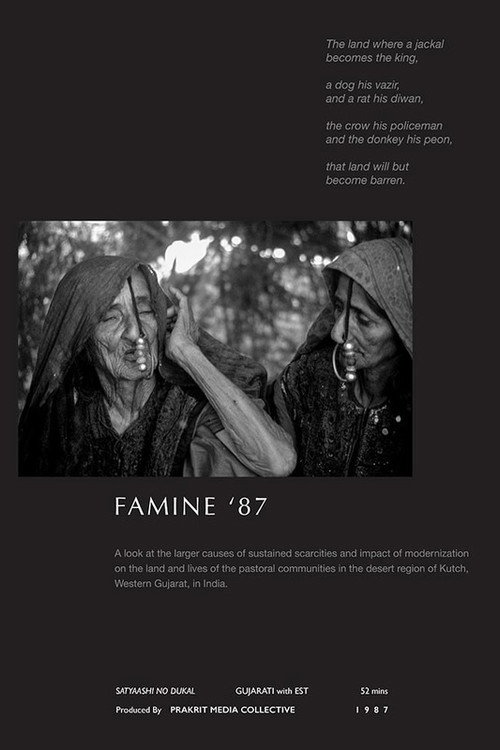
Famine '87 1988
Famine '87 (1988) delivers a raw, intimate portrait of survival against the odds in the arid landscapes of Western Gujarat's Kutch region.
Frequently Asked Questions
What is Famine '87 (1988) about?
Famine '87 (1988) explores how the Banni pastoralists of Western Gujarat's Kutch region grapple with extreme scarcity and the unintended consequences of modernization. The film delves into the erosion of their traditional way of life and the harsh impact on both land and community.
Who directed Famine '87?
Director information is not available.
Who stars in Famine '87?
Starring real-life members of the Banni community, the film features intimate portrayals of their daily struggles and resilience.
Is Famine '87 (1988) worth watching?
As a documentary focused on social and environmental issues, Famine '87 offers a compelling, if sobering, perspective on survival in the face of adversity. Its concise runtime and authentic storytelling make it a thought-provoking watch for those interested in human resilience and ecological themes.
How long is Famine '87?
Famine '87 runs for 52 minutes.
Famine '87 (1988): A Documentary's Stark Look at Drought and Displacement — Full Movie Info
Famine '87 (1988) delivers a raw, intimate portrait of survival against the odds in the arid landscapes of Western Gujarat's Kutch region. This gripping 52-minute documentary immerses viewers in the harsh realities faced by the Banni community, whose pastoral way of life unravels under the weight of prolonged scarcity and misguided modernization efforts. Through striking visuals and deeply personal storytelling, the film exposes how flawed policies and environmental neglect erode not just land and livelihoods but the very fabric of a culture deeply rooted in tradition. The atmosphere is one of quiet resilience, where every frame feels charged with the weight of history and the fragility of existence.
Directed with a keen eye for authenticity, Famine '87 (1988) stands as a poignant critique of social and ecological mismanagement, offering a lens into the human cost of progress. Viewers will find themselves drawn into a narrative that balances stark realism with moments of quiet hope, revealing how communities adapt, resist, and endure when faced with systemic challenges. Whether you're drawn by its documentary craftsmanship or its urgent themes, this film promises a thought-provoking experience that lingers long after the credits roll.