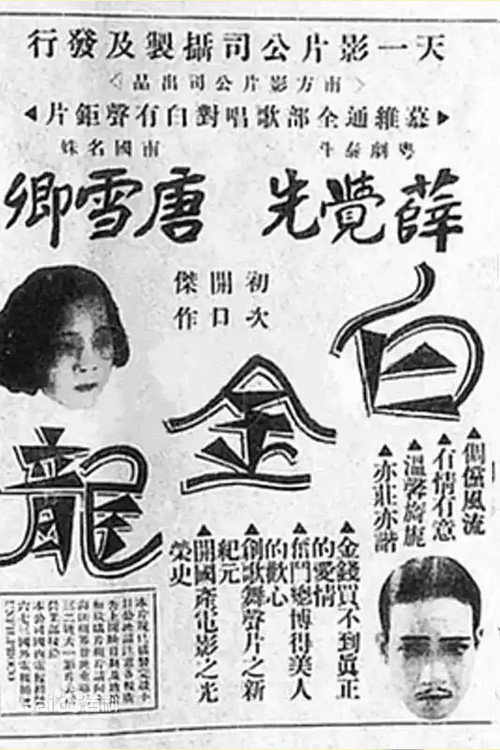
Baijin Long 1933
Set against the vibrant backdrop of 1930s Cantonese cinema, *Baijin Long (1933)* is a romantic comedy that blends disguise, ambition, and heartfelt longing.
Director: Xiaodan Tang
Cast
Frequently Asked Questions
What is Baijin Long (1933) about?
This romantic classic follows a wealthy young man who pretends to be a bellhop to earn the affection of a woman who admires hardworking men. His deception unfolds against the backdrop of a bustling hotel, testing the boundaries of love and honesty.
Who directed Baijin Long?
The film was directed by Xiaodan Tang, a pioneer in early Cantonese cinema whose work helped shape the region's film industry.
Who stars in Baijin Long?
The main cast includes Sit Kok-Sin, Tong Suet-hing, Nai Pon Fee, and Neong Yuk Moy, with Sit Kok-Sin also adapting the original stage musical.
Is Baijin Long (1933) worth watching?
While it lacks an IMDb rating, *Baijin Long* is a fascinating time capsule of 1930s Cantonese cinema, blending romance, humor, and social commentary. Its historical significance and charming performances make it a compelling watch for fans of classic films.
How long is Baijin Long?
The runtime of *Baijin Long (1933)* is 123 minutes.
About Baijin Long (1933) — A Forbidden Love Story Set in Early Cantonese Cinema
Set against the vibrant backdrop of 1930s Cantonese cinema, *Baijin Long (1933)* is a romantic comedy that blends disguise, ambition, and heartfelt longing. Directed by Xiaodan Tang, this early talkie follows a privileged hotel heir who abandons his luxurious lifestyle to pose as a humble bellhop, all to win the heart of a woman who values authenticity over wealth. Inspired by a Broadway musical and a Hollywood silent film, this Cantonese-language gem captures the playful yet poignant spirit of forbidden love and societal expectations. With its rich atmosphere and charming performances, the film explores themes of identity, class, and the pursuit of genuine connection.
Starring Sit Kok-Sin, Tong Suet-hing, Nai Pon Fee, and Neong Yuk Moy, *Baijin Long (1933)* stands as a landmark in early Asian cinema, offering a delightful mix of humor, romance, and social commentary. Its black-and-white visuals and theatrical roots create an immersive experience that transports viewers to a bygone era of cinematic innovation.