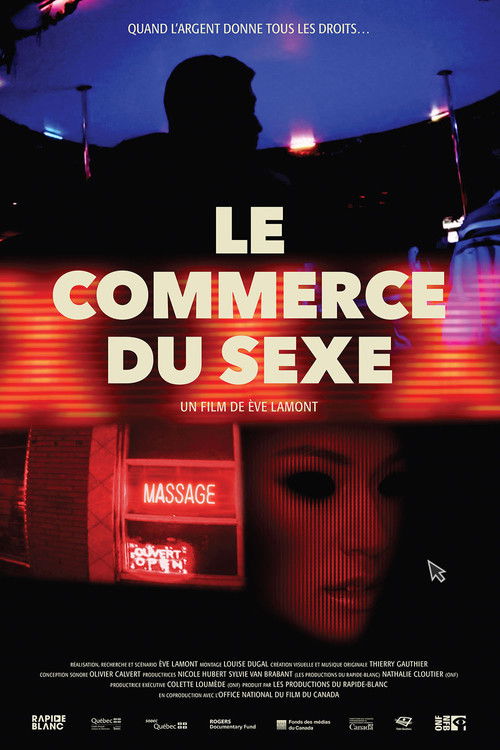
Le commerce du sexe 2015
Directed by Eve Lamont, *Le commerce du sexe* (2015) peels back the layers of a global industry that has transformed over three decades, evolving from scattered street corners to a sprawling, interconnected trade.
Director: Eve Lamont
Frequently Asked Questions
What is *Le commerce du sexe* (2015) about?
This documentary-drama explores how the global sex trade has expanded into a shadow economy worth billions, examining industries from street prostitution to pornography. Eve Lamont's film questions who truly profits from a system that treats women's bodies as disposable merchandise.
Who directed *Le commerce du sexe*?
The film was directed by Eve Lamont, a filmmaker known for her investigative documentaries that tackle social issues with unflinching honesty.
Who stars in *Le commerce du sexe*?
The cast features real-life participants and experts within the sex trade, though specific names are not listed in available records.
Is *Le commerce du sexe* (2015) worth watching?
As a documentary-drama, it's a sobering experience that sheds light on a hidden industry. While not an easy watch, its unblinking portrayal makes it valuable for those interested in social justice and economic exploitation.
How long is *Le commerce du sexe*?
The documentary runs for 76 minutes.
About Le commerce du sexe (2015) — A Hard-Hitting Look at the Global Sex Trade Industry
Directed by Eve Lamont, *Le commerce du sexe* (2015) peels back the layers of a global industry that has transformed over three decades, evolving from scattered street corners to a sprawling, interconnected trade. This raw documentary-drama plunges viewers into a world where luxury escorts, underground massage parlors, and digital platforms blur the line between commerce and exploitation. Lamont's lens exposes the uncomfortable truth: behind every transaction lies a system that reduces human dignity to a negotiable commodity.
Through interviews and unflinching visuals, the film dissects the mechanics of an industry that thrives on invisibility, where participants—from buyers to facilitators—often justify their roles with shocking detachment. The atmosphere is tense, almost clinical, as the camera captures the banality of exploitation masked by neon lights and polished façades. The documentary challenges viewers to confront uncomfortable questions about power, consent, and the price of modern desire.