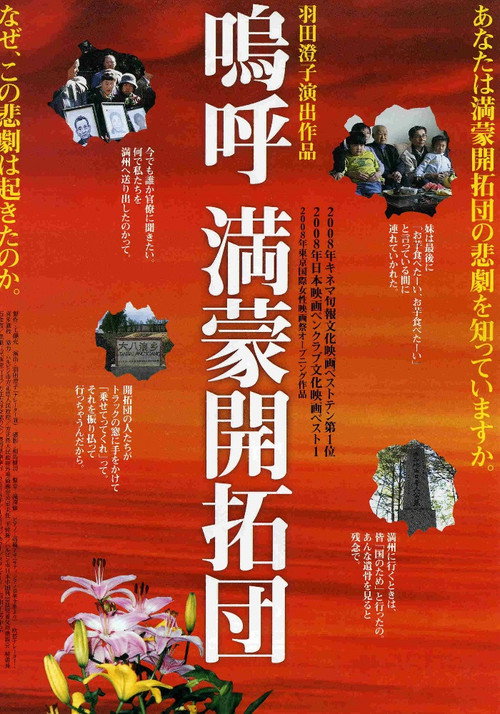
The Japanese Settlers to the Manchuria and Inner Mongolia of Mainland China 2009
Directed by the late Sumiko Haneda, *The Japanese Settlers to the Manchuria and Inner Mongolia of Mainland China* (2009) is a haunting documentary that examines the human cost of imperial ambition.
Director: Sumiko Haneda
Frequently Asked Questions
What is *The Japanese Settlers to the Manchuria and Inner Mongolia of Mainland China* (2009) about?
This documentary explores the tragic legacy of Japan's colonial rule in Manchukuo during the 1930s and 40s, focusing on the millions of settlers and locals whose lives were shattered by war. It examines the human cost behind political ambitions and the aftermath of imperial expansion.
Who directed *The Japanese Settlers to the Manchuria and Inner Mongolia of Mainland China*?
The film was directed by Sumiko Haneda, a filmmaker known for her documentaries on Japanese colonial history and wartime experiences.
Who stars in *The Japanese Settlers to the Manchuria and Inner Mongolia of Mainland China*?
Director information is not available beyond Sumiko Haneda.
Is *The Japanese Settlers to the Manchuria and Inner Mongolia of Mainland China* (2009) worth watching?
As a documentary, it's a powerful choice for viewers interested in historical narratives or colonial studies. While it lacks mainstream acclaim, its depth and emotional resonance make it a compelling watch for those seeking a nuanced perspective on this oft-neglected chapter of history.
How long is *The Japanese Settlers to the Manchuria and Inner Mongolia of Mainland China*?
The film runs for 120 minutes.
About The Japanese Settlers to the Manchuria and Inner Mongolia of Mainland China (2009) — A poignant documentary on war, displacement, and colonial history
Directed by the late Sumiko Haneda, *The Japanese Settlers to the Manchuria and Inner Mongolia of Mainland China* (2009) is a haunting documentary that examines the human cost of imperial ambition. Set against the backdrop of Manchukuo, the puppet state Japan established in Northeast China during the 1930s, the film traces the devastating consequences of war and colonial expansion on millions of settlers and locals. Through archival footage and personal testimonies, Haneda crafts a solemn meditation on displacement, loss, and the lingering scars of history. The 120-minute runtime immerses viewers in a chapter of World War II rarely explored in such intimate detail, weaving together political intrigue and the quiet tragedies of ordinary people caught in extraordinary circumstances.
The documentary doesn't just recount events—it evokes the atmosphere of a shattered era, where hope and hardship intertwined in a fragile balance. By focusing on the lives uprooted by Japan's wartime policies, Haneda challenges audiences to reflect on the broader themes of colonialism, resilience, and the price of power. Whether you're a history enthusiast or a documentary lover, this film offers a sobering yet essential perspective on a pivotal moment in Asian geopolitics.