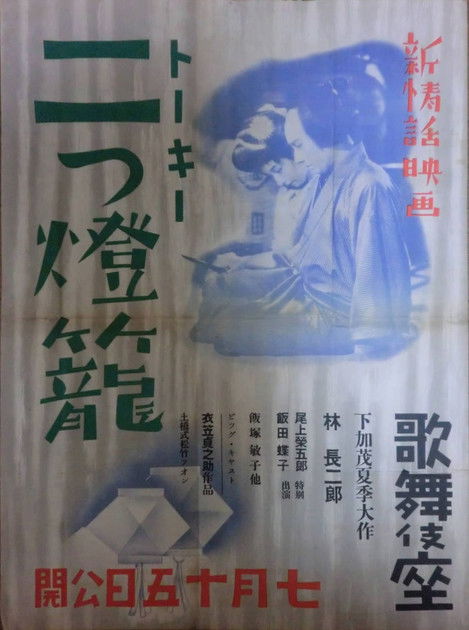
Two Lanterns 1933
In the realm of Japanese cinema, Teinosuke Kinugasa's 'Two Lanterns' (1933) stands as a poignant and mournful masterpiece. This historical drama weaves a narrative that explores the complexities of the human experience.
Director: Teinosuke Kinugasa
Cast



Frequently Asked Questions
What is Two Lanterns (1933) about?
This historical drama explores the complexities of the human experience through a poignant narrative that invites viewers to reflect on the fragility of life and the importance of human connection.
Who directed Two Lanterns?
Teinosuke Kinugasa, a renowned Japanese filmmaker, brought his unique vision to the project.
Who stars in Two Lanterns?
Kazuo Hasegawa, Eigorō Onoe, and Toshiko Iizuka deliver standout performances in this mournful masterpiece.
Is Two Lanterns (1933) worth watching?
With its thought-provoking narrative and poignant performances, 'Two Lanterns' is a must-watch for fans of historical dramas and those seeking a meaningful cinematic experience.
How long is Two Lanterns?
The film has a runtime of 83 minutes.
About Two Lanterns (1933) — A Mournful Masterpiece by Teinosuke Kinugasa
In the realm of Japanese cinema, Teinosuke Kinugasa's 'Two Lanterns' (1933) stands as a poignant and mournful masterpiece. This historical drama weaves a narrative that explores the complexities of the human experience. The film's somber tone and poignant storytelling invite viewers to reflect on the fragility of life and the importance of human connection. With a runtime of 83 minutes, 'Two Lanterns' is a thought-provoking experience that lingers long after the credits roll.
As we delve into the world of 'Two Lanterns', we find ourselves surrounded by a talented cast, including Kazuo Hasegawa, Eigorō Onoe, and Toshiko Iizuka. Their performances bring depth and nuance to the story, making the film a compelling watch. Director Teinosuke Kinugasa's vision is evident in every frame, showcasing his mastery of the medium.
Through its exploration of the human condition, 'Two Lanterns' invites viewers to contemplate the significance of life and the importance of human relationships. This historical drama is a testament to the power of cinema to evoke emotions and spark meaningful conversations.