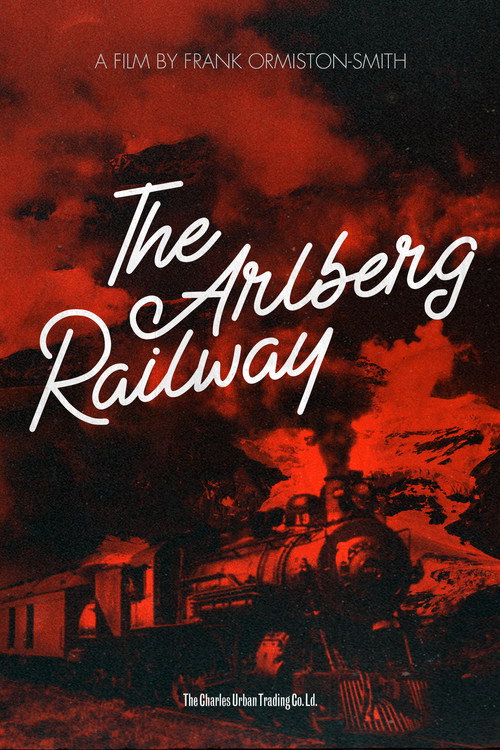
The Arlberg Railway 1906
Step back to 1906 with *The Arlberg Railway*, a six-minute silent documentary that captures the thrill of early rail travel in Austria.
Director: Frank Ormiston-Smith
Frequently Asked Questions
What is The Arlberg Railway (1906) about?
*The Arlberg Railway* transports viewers to early 20th-century Austria, offering a ride-along perspective from the rear of a locomotive as it navigates the dramatic Arlberg mountain pass. This short documentary captures the railway's winding tracks, steep viaducts, and sweeping alpine vistas, creating a mesmerizing visual journey.
Who directed The Arlberg Railway?
Frank Ormiston-Smith is credited as the director of *The Arlberg Railway*.
Who stars in The Arlberg Railway?
Cast details for *The Arlberg Railway* are not listed in historical records.
Is The Arlberg Railway (1906) worth watching?
While *The Arlberg Railway* is a niche silent documentary with no IMDb rating, its historical and cinematic significance makes it a fascinating watch for fans of early filmmaking. Its six-minute runtime is short but packed with the raw energy of pioneering cinema, offering a unique glimpse into turn-of-the-century rail travel.
How long is The Arlberg Railway?
*The Arlberg Railway* runs for approximately 6 minutes.
About The Arlberg Railway (1906) — Silent Film's First Mountain Railroad Adventure
Step back to 1906 with *The Arlberg Railway*, a six-minute silent documentary that captures the thrill of early rail travel in Austria. Directed by Frank Ormiston-Smith, this short film immerses viewers in the raw beauty of the Arlberg Railway, which winds through the Austrian Alps connecting Innsbruck and Bludanz. As the camera takes its place at the rear of the locomotive, passengers are treated to a hypnotic ride over mountain viaducts and through deep tunnels, with the rhythmic clatter of wheels and shifting landscapes creating an unforgettable sense of motion. This was a time when cinema was still discovering its narrative power, and such 'phantom railroad' films offered audiences a new way to experience the adventure of travel without leaving their seats.
The film belongs to a fascinating transitional era in cinema history, blending documentary realism with the spectacle of early filmmaking. Its editing reveals the linear, almost theatrical nature of the experience, with cuts that feel deliberate and unpolished—a hallmark of the period's experimental approach. While the direction is credited to Ormiston-Smith, the true star here is the Arlberg Railway itself, whose engineering marvels and breathtaking vistas stand as a testament to human ingenuity. For modern audiences, *The Arlberg Railway (1906)* offers more than just a glimpse into the past; it's a time capsule of motion, adventure, and the pioneering spirit of cinema.