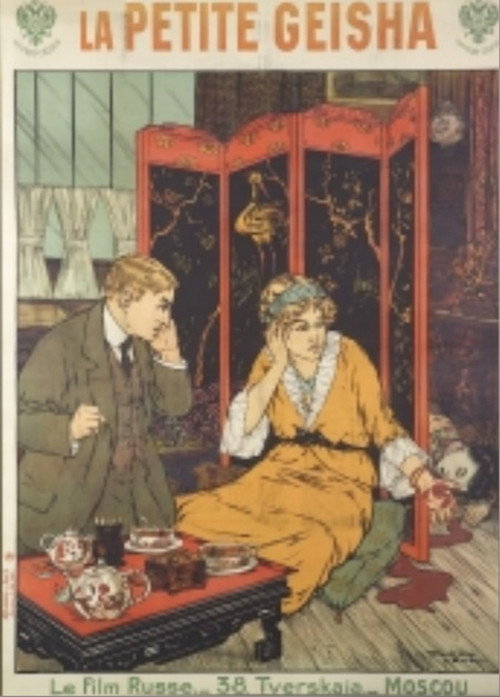
The Love of a Japanese Woman 1913
In this silent-era drama from 1913, *The Love of a Japanese Woman* explores a heartbreaking tale of devotion and betrayal set against the backdrop of early 20th-century cultural clashes.
Director: Kai Hansen
Cast

Frequently Asked Questions
What is The Love of a Japanese Woman (1913) about?
The film tells the tragic story of Hanako, a Japanese nurse who falls for a Russian lieutenant, Orloff. After he brings her to Moscow and abandons her for another woman, her heartbreak leads to a devastating conclusion. The story examines cultural divides and the pain of unrequited love.
Who directed The Love of a Japanese Woman?
The film was directed by Kai Hansen, a pioneering figure in early silent cinema whose work often explored human emotions with raw intensity.
Who stars in The Love of a Japanese Woman?
The cast features Hanako in the lead role, alongside Aleksandr Rudnitsky and Yelena Smirnova, who bring depth to the film's central relationships.
Is The Love of a Japanese Woman (1913) worth watching?
While it's a silent-era drama, its emotional weight and historical significance make it intriguing for classic film enthusiasts. The tragic narrative and cultural themes offer more than just nostalgia, though its unrated status means expectations should be tempered.
How long is The Love of a Japanese Woman?
Runtime details are not listed.
About The Love of a Japanese Woman (1913) — A Forgotten Silent Drama of Love and Loss
In this silent-era drama from 1913, *The Love of a Japanese Woman* explores a heartbreaking tale of devotion and betrayal set against the backdrop of early 20th-century cultural clashes. Directed by Kai Hansen, the film follows Lieutenant Orloff, a Russian officer recovering in a Japanese hospital where he meets Hanako, a dedicated volunteer nurse whose gentle charm captivates him. When Orloff's love fades after returning to Moscow, he abandons Hanako for a more glamorous woman, leaving the fragile geisha to face a tragic destiny alone. The story weaves themes of cultural misunderstanding, unrequited love, and the fragility of human connections.
The atmosphere is steeped in melancholy, with stark contrasts between the serene Japanese setting and the cold indifference of Moscow society. The film's emotional core lies in Hanako's unwavering loyalty, which ultimately meets a heart-wrenching end. A poignant snapshot of silent cinema, *The Love of a Japanese Woman* remains a compelling watch for fans of historical dramas and tragic romances.