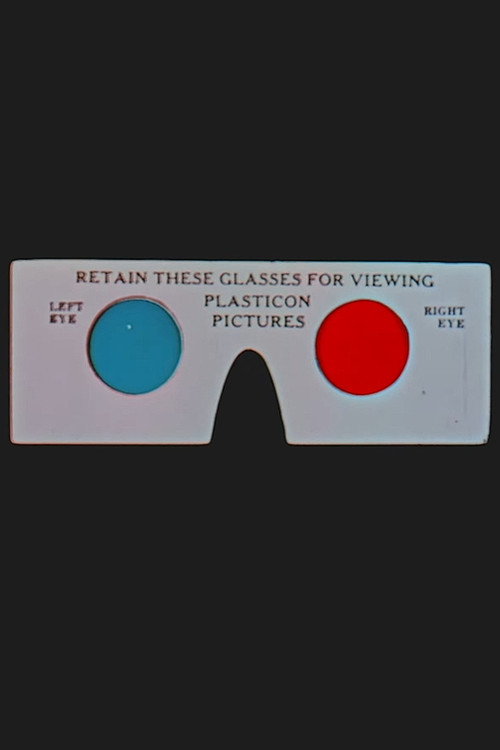
Movies of the Future 1922
In the winter of 1922, visionary inventor William Van Doren Kelley premiered 'Movies of the Future,' a groundbreaking double feature that introduced audiences to the magic of anaglyphic 3D cinema.
Director: William Van Doren Kelley
Frequently Asked Questions
What is Movies of the Future (1922) about?
This short film double feature showcased two experimental 3D movies—'Plasticons' and 'New York City'—using anaglyphic technology to create depth and immersion. The program highlighted early color film techniques alongside the groundbreaking use of stereoscopic vision.
Who directed Movies of the Future?
The film was directed by William Van Doren Kelley, an inventor known for pioneering the Prizma color process.
Who stars in Movies of the Future?
The main cast details are not documented, as the film's focus was on technical innovation rather than named performers.
Is Movies of the Future (1922) worth watching?
As a historical artifact, 'Movies of the Future' is fascinating for its technical ambition and role in 3D cinema's origins. Since it's unrated and no modern copies exist, its appeal is niche but undeniably significant for film buffs.
How long is Movies of the Future?
The film has a runtime of 14 minutes.
Movies of the Future (1922): The 1920s Experiment That Predicted 3D Cinema
In the winter of 1922, visionary inventor William Van Doren Kelley premiered 'Movies of the Future,' a groundbreaking double feature that introduced audiences to the magic of anaglyphic 3D cinema. Comprising two short films—'Plasticons' and 'New York City'—this 14-minute showcase debuted in New York just weeks after the world's first 3D public screening. Kelley's Prizma color process added vibrant hues to the immersive experience, blending early color film techniques with the thrill of stereoscopic vision. Long before modern 3D blockbusters, 'Movies of the Future' offered a fleeting glimpse into the future of entertainment, merging artistry with innovation in a way that felt decades ahead of its time.
While the original cast remains a mystery, Kelley's technical brilliance shines through as the driving force behind this forgotten milestone. More than a novelty, 'Movies of the Future' was a bold experiment in sensory storytelling, where depth and dimension transformed ordinary cityscapes into something extraordinary. Though lost to history, its legacy as one of cinema's earliest flirtations with 3D endures, a testament to the relentless pursuit of cinematic evolution.