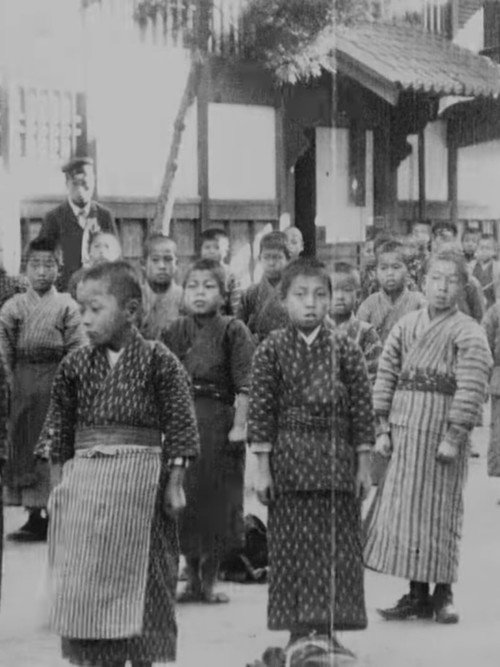
Japanese Schoolchildren 1901
Step back in time to 1901 with *Japanese Schoolchildren*, a fascinating early documentary capturing the innocence and discipline of young students in Japan's Meiji era.
Frequently Asked Questions
What is Japanese Schoolchildren (1901) about?
This short documentary transports viewers to early 20th-century Japan, showcasing young students in a traditional school setting. The brief silent footage captures the essence of Meiji-era education, highlighting the discipline and curiosity of children during a period of cultural transition.
Who directed Japanese Schoolchildren?
Director information is not available.
Who stars in Japanese Schoolchildren?
The cast details are not listed, as this was a documentary featuring unnamed schoolchildren from the era.
Is Japanese Schoolchildren (1901) worth watching?
Given its historical significance as one of the earliest films documenting Japanese school life, *Japanese Schoolchildren* is a must-watch for history and film enthusiasts. While it's more of a time capsule than a narrative film, its charm lies in its authenticity and the rare glimpse it offers into a bygone era.
How long is Japanese Schoolchildren?
The runtime for *Japanese Schoolchildren* is approximately 2 minutes.
About Japanese Schoolchildren (1901) — Discover the Earliest Footage of Japanese School Life
Step back in time to 1901 with *Japanese Schoolchildren*, a fascinating early documentary capturing the innocence and discipline of young students in Japan's Meiji era. Produced by the pioneering Warwick Trading Company, this brief two-minute film offers a rare glimpse into daily life in a Japanese schoolroom, where children in traditional attire sit attentively at wooden desks, their expressions a mix of curiosity and studiousness. The silent footage, devoid of dialogue but rich in historical texture, transports viewers to an era when education was just beginning to modernize under Western influences while retaining deep cultural roots. The grainy black-and-white visuals create an intimate, almost time-capsule-like atmosphere, evoking curiosity about the lives behind the faces on screen.
As one of the earliest known films of its kind, *Japanese Schoolchildren (1901)* holds immense value for cinephiles and historians alike. Though modest in length, its historical significance cannot be overstated, offering a window into early 20th-century Japanese society through the lens of youth education. The documentary's simplicity belies its charm, serving as a poignant reminder of how much—and how little—has changed in classrooms over a century later.