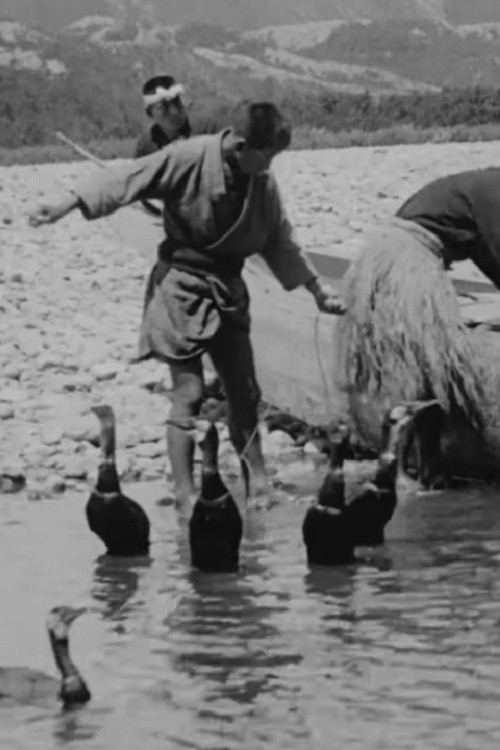
Fishing with Cormorants. Isle of Yeso, Japan 1911
Step back to 1911 and journey to the rugged coastline of Yeso, Japan, where this silent-era documentary captures the timeless art of cormorant fishing.
Frequently Asked Questions
What is *Fishing with Cormorants. Isle of Yeso, Japan (1911)* about?
This silent documentary transports viewers to the shores of Yeso, Japan, where trained cormorants dive in coordinated swarms to catch fish under the guidance of local fishermen. The film documents a centuries-old tradition, preserving a fleeting moment in early 20th-century Japanese culture and coastal life.
Who directed *Fishing with Cormorants. Isle of Yeso, Japan*?
Director information is not available.
Who stars in *Fishing with Cormorants. Isle of Yeso, Japan*?
The film features local fishermen and their trained cormorants as the main 'performers,' though individual names are unlisted.
Is *Fishing with Cormorants. Isle of Yeso, Japan (1911)* worth watching?
While unrated and brief, the film is a fascinating time capsule for documentary enthusiasts and history lovers. Its authentic portrayal of traditional fishing practices and serene cinematography make it a compelling watch for those interested in early film and cultural heritage.
How long is *Fishing with Cormorants. Isle of Yeso, Japan*?
The runtime is approximately 30 minutes.
Fishing with Cormorants. Isle of Yeso, Japan (1911): Early 20th-Century Documentary Footage
Step back to 1911 and journey to the rugged coastline of Yeso, Japan, where this silent-era documentary captures the timeless art of cormorant fishing. Shot on hand-cranked film stock, the 30-minute reel immerses viewers in the hypnotic rhythm of flocks of trained cormorants diving in unison, their silhouettes slicing through misty waters as local fishermen guide the birds with practiced precision. The footage exudes a meditative calm, blending man and nature into a single, enduring tradition, while preserving a rare glimpse of early 20th-century Japanese coastal life.
Though the director's name has faded from the record, *Fishing with Cormorants. Isle of Yeso, Japan (1911)* endures as a quiet testament to cultural heritage and the unchanging bond between humans and wildlife. Without dialogue or orchestration, the film's power lies in its stark realism—the play of light on water, the focused energy of the birds, and the patient silhouettes of the fishermen against the horizon. For history buffs and nature lovers alike, this early documentary offers a portal to a bygone era, where tradition was written not in books, but in the ebb and flow of the tides.