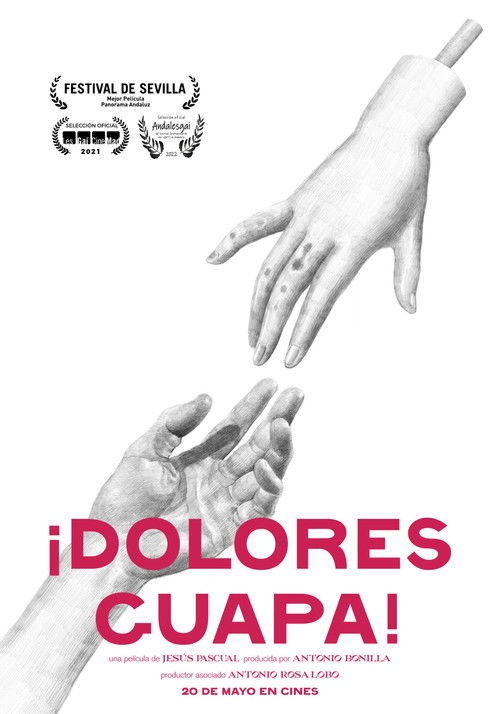
Dolores guapa! 2022
"Queer stories in Seville's Holy Week"
Dolores guapa! (2022), a captivating documentary by Jesús Pascual, dives into the heart of Seville's Holy Week to explore how queer communities have woven their identities into its sacred traditions.
Director: Jesús Pascual
Frequently Asked Questions
What is Dolores guapa! (2022) about?
This documentary examines how queer communities in Seville engage with the city's iconic Holy Week traditions. It explores the lives of mariquitas—effeminate men who grew up within these rituals—and how new dissident identities today respond to or reshape them.
Who directed Dolores guapa!?
Dolores guapa! was directed by Jesús Pascual, a filmmaker known for his work on social and cultural themes.
Who stars in Dolores guapa!?
The documentary features a cast of local Seville residents, activists, and queer individuals who share their personal and cultural experiences.
Is Dolores guapa! (2022) worth watching?
As a documentary that blends cultural insight with queer storytelling, Dolores guapa! offers a unique perspective on tradition and identity. Its focus on Seville's Holy Week makes it a standout for fans of thoughtful, visually engaging films.
How long is Dolores guapa!?
Dolores guapa! has a runtime of 109 minutes.
🎥 Trailer
About Dolores guapa! (2022) — Queer Stories Behind Seville's Holy Week Traditions
Dolores guapa! (2022), a captivating documentary by Jesús Pascual, dives into the heart of Seville's Holy Week to explore how queer communities have woven their identities into its sacred traditions. Through the lens of Seville's beloved mariquitas—effeminate men who grew up embracing these rituals—the film reveals a hidden history of resistance and reinvention. Dolores guapa! isn't just about preserving the past; it's about how new dissident identities today engage with, challenge, or transform these deeply rooted customs. The result is a visually rich, emotionally nuanced portrait of a city where faith, culture, and queer life intertwine in unexpected ways.
With an intimate and observational style, Pascual crafts a narrative that goes beyond mere tradition, highlighting the spaces where queer Seville exists in dialogue with its surroundings. The documentary thrives on contrasts: the solemnity of Holy Week processions against the playful, subversive energy of its queer participants. It's a celebration of how marginalized voices reclaim and reinterpret history, turning inherited rituals into acts of defiance and liberation.