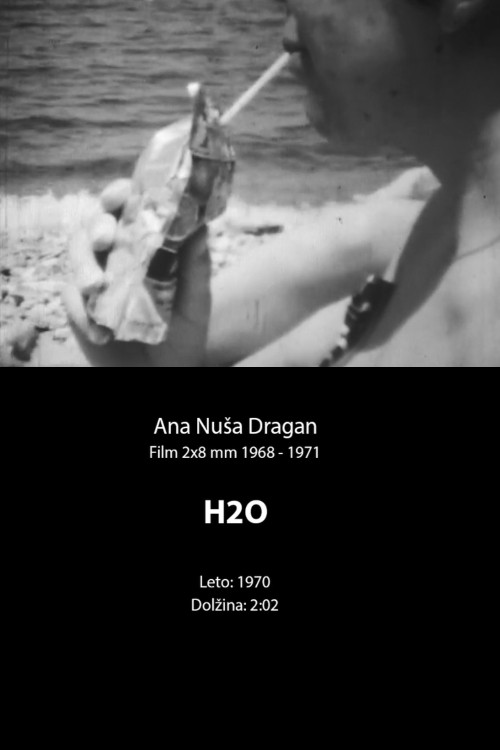
H2O 1970
H2O (1970) marks director Ana Nuša Dragan's bold leap into experimental short filmmaking, capturing the playful essence of a summer spent behind the camera at Koper's 1968 film school.
Director: Ana Nuša Dragan
Frequently Asked Questions
What is H2O (1970) about?
H2O (1970) is a 2-minute experimental short that captures water's movement and textures through vibrant color and sound. It reflects the innovative spirit of 1960s film education in Slovenia, blending abstract visuals with playful experimentation.
Who directed H2O?
H2O was directed by Ana Nuša Dragan, a pioneering Slovenian filmmaker known for her experimental approach and contributions to film education during the late 1960s.
Who stars in H2O?
Cast information for H2O (1970) is not publicly listed.
Is H2O (1970) worth watching?
Though brief, H2O (1970) offers a fascinating snapshot of early experimental cinema and the evolution of sound film. Its historical value and artistic ambition make it a niche but intriguing watch for film history enthusiasts.
How long is H2O?
H2O (1970) has a runtime of 2 minutes.
About H2O (1970) — A Glimpse at Early Experimental Filmmaking in Slovenia
H2O (1970) marks director Ana Nuša Dragan's bold leap into experimental short filmmaking, capturing the playful essence of a summer spent behind the camera at Koper's 1968 film school. Shot in vibrant color with crisp sound, the 2-minute short showcases Dragan's blossoming mastery of visual storytelling and inventive editing techniques, all while reflecting the experimental spirit of the era. As part of a dynamic duo leading film education at Pionirski dom in Ljubljana, she and colleague Tone Rački explored the boundaries of 8mm filmmaking, transforming raw footage into a poetic meditation on water. The film pulses with youthful curiosity, weaving movement, rhythm, and elemental wonder into a compact yet evocative cinematic statement.
Though brief, H2O (1970) stands as a historically significant entry in Dragan's filmography, bridging silent-era experimentation with the emerging language of sound cinema. The short's abstract treatment of water—its textures, reflections, and motion—echoes broader artistic movements of the late 1960s, blending avant-garde form with accessible emotion. It's a fleeting but memorable snapshot of creative discovery, where technical innovation meets the joy of discovery.