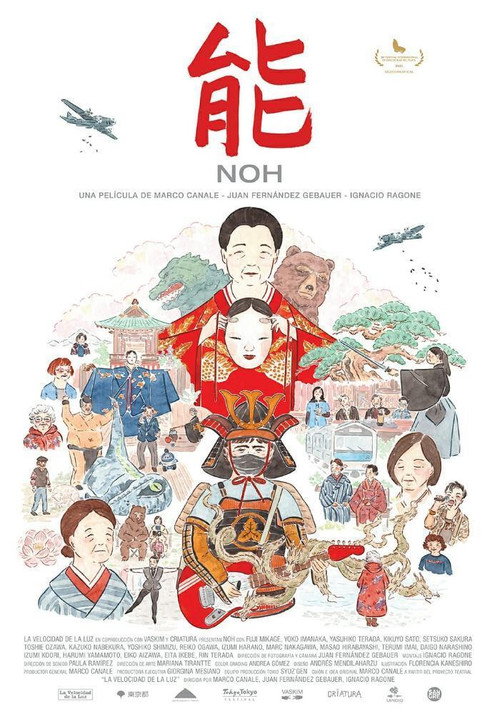
Noh 2021
In *Noh (2021)*, director Ignacio Ragone explores a bold cultural experiment that bridges continents and generations through the transformative power of theater.
Director: Ignacio Ragone
Cast
Frequently Asked Questions
What is Noh (2021) about?
*Noh* follows playwright Marco Canale's visionary project, which began in Argentina and traveled to Japan, where indigenous elderly women reconnected with their traditions through theater. The documentary explores their journey of self-discovery, blending modern life with ancestral roots.
Who directed Noh?
Noh (2021) was directed by Ignacio Ragone, who co-created the film with playwright Marco Canale and Juan Fernández Gebauer.
Who stars in Noh?
The documentary features Yasuhiko Terada, Fuji Mikage, Yoko Imanaka, and Marco Canale in pivotal roles.
Is Noh (2021) worth watching?
As a documentary blending cultural exploration with intimate storytelling, *Noh* offers a unique perspective on tradition and modernity. While it hasn't been rated on IMDb, its depth and emotional resonance make it compelling for fans of thoughtful, character-driven films.
How long is Noh?
Noh has a runtime of 75 minutes.
About Noh (2021) — A Documentary on Culture, Memory, and the Power of Theater
In *Noh (2021)*, director Ignacio Ragone explores a bold cultural experiment that bridges continents and generations through the transformative power of theater. Stemming from playwright Marco Canale's 2017 staging of *La velocidad de la luz* in Buenos Aires' Villa 31 slum, the project witnessed indigenous elderly women reclaim their ancestral traditions while engaging with modernity, religion, and politics. Three years later, Canale brought this vision to Japan, where the idea evolved into a poignant documentary that captures the universal struggle for identity and belonging.
The film unfolds as a poetic meditation on memory and resilience, weaving together the voices of Yasuhiko Terada, Fuji Mikage, Yoko Imanaka, and Marco Canale himself. Through delicate storytelling and intimate visuals, *Noh* invites viewers to reflect on how cultural heritage can serve as both an anchor and a bridge to the present, offering a deeply human perspective on connection and renewal.