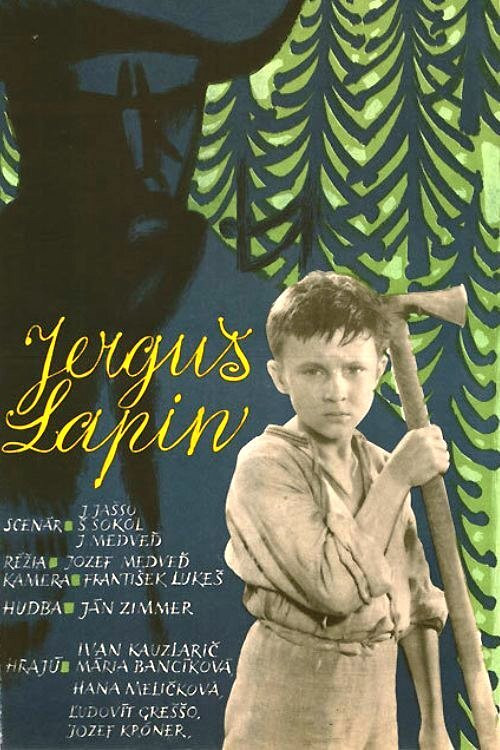
Jerguš Lapin 1960
Set against the rugged backdrop of mid-20th century Central Europe, *Jerguš Lapin* (1960) directed by Jozef Medveď is a poignant historical drama that weaves a tale of resilience and injustice.
Director: Jozef Medveď
Cast

Frequently Asked Questions
What is Jerguš Lapin (1960) about?
This gripping drama follows Jerguš, a young boy who loses his father to gendarmes and must navigate brutal factory life to support his family. Disillusioned by exploitation, he seeks independence by returning to the mountains, where his father once fought for justice.
Who directed Jerguš Lapin?
Jozef Medveď directed *Jerguš Lapin*, crafting a historically rich narrative that highlights social struggles.
Who stars in Jerguš Lapin?
The film features Ivan Kauzlarič, Mária Bancíková, Jozef Kroner, Ľudovít Greššo, and Hana Meličková in key roles.
Is Jerguš Lapin (1960) worth watching?
*Jerguš Lapin* is a compelling watch for fans of historical dramas and poignant storytelling. Though unrated on IMDb, its themes of resilience and injustice resonate strongly, making it a hidden gem worth exploring.
How long is Jerguš Lapin?
Runtime details are not listed for this film.
Jerguš Lapin: The Struggle for Justice — 1960 Movie Info
Set against the rugged backdrop of mid-20th century Central Europe, *Jerguš Lapin* (1960) directed by Jozef Medveď is a poignant historical drama that weaves a tale of resilience and injustice. The film follows young Jerguš, whose father's tragic death at the hands of gendarmes leaves the boy to fend for himself and his mother. Forced into grueling labor in factories and the city, Jerguš dreams of freedom, only to find himself drawn back to the mountains where his father once fought for the people's cause. The story explores themes of oppression, survival, and the enduring human spirit.
With a cast led by Ivan Kauzlarič, Mária Bancíková, and Jozef Kroner, *Jerguš Lapin* captures the harsh realities of its time through compelling performances. Medveď's direction infuses the film with a raw, emotional depth, making it a standout in the drama and history genres. The atmosphere is one of quiet defiance and quiet sorrow, as Jerguš's journey becomes a symbol of hope amid adversity.