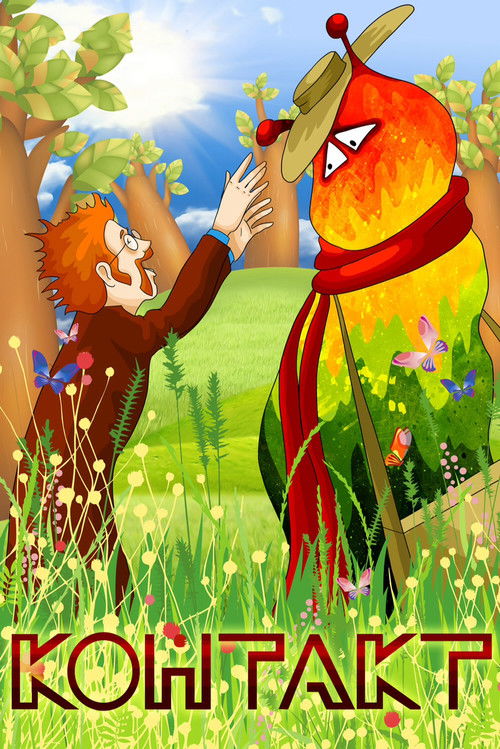
Contact 1978
In the short sci-fi animation Contact (1978), a lone traveler stumbles upon a quiet field meeting that rewrites everything he knows about Earth's place in the universe.
Director: Vladimir Tarasov
Cast

Frequently Asked Questions
What is Contact (1978) about?
Contact follows a traveler who encounters an extraterrestrial being during a walk through a rural landscape. The meeting unfolds with quiet mystery, exploring themes of discovery and connection across vast distances.
Who directed Contact?
Contact was directed by Vladimir Tarasov, a notable figure in Soviet animation known for blending poetic visuals with imaginative storytelling.
Who stars in Contact?
The film features Leonid Chizhik in the central role, portraying the traveler who makes the unexpected encounter.
Is Contact (1978) worth watching?
While Contact is unrated and short, its artistic direction and thematic depth make it a fascinating watch for fans of vintage sci-fi and Soviet animation. Its brevity doesn't detract from its charm—it enhances the poetic experience.
How long is Contact?
Contact has a runtime of 10 minutes.
About Contact (1978) — A Soviet Sci-Fi Fable of First Contact
In the short sci-fi animation Contact (1978), a lone traveler stumbles upon a quiet field meeting that rewrites everything he knows about Earth's place in the universe. Directed by Soviet animator Vladimir Tarasov, this 10-minute poetic journey blends the wonder of space exploration with the intimacy of human curiosity. The film drifts between realism and surrealism, as lush landscapes meet an otherworldly visitor who arrives not to conquer, but to connect. Tarasov's minimalist visual style and understated storytelling evoke a sense of quiet awe, turning a simple encounter into a meditation on first contact and the fragility of human perception.
Though brief, Contact lingers like a dream—a tiny cosmic fable wrapped in the language of Soviet animation, where every brushstroke feels intentional. The film invites viewers to ponder what it means to witness the impossible, all within a runtime that feels both brisk and timeless. It's a slice of Cold War-era sci-fi that still resonates today, a reminder that wonder doesn't need scale to be profound.