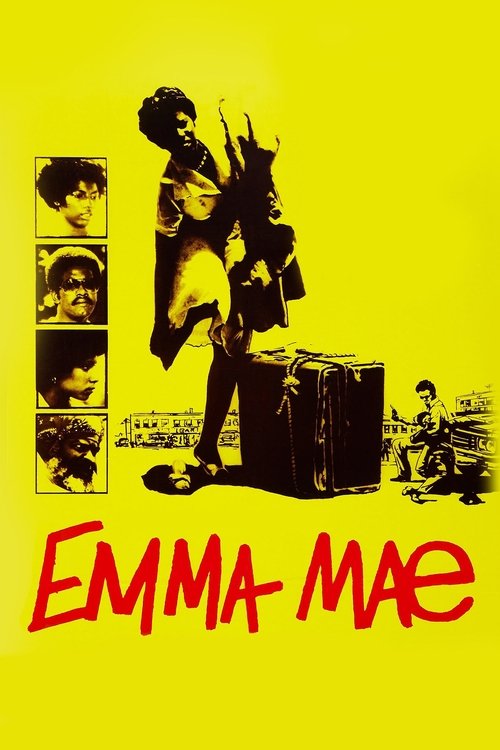
Emma Mae 1976
"She’s just off the bus from the deep South… and learning fast how to out-smart and out-though the city just to stay alive… she’s EMMA MAE!"
Directed by Jamaa Fanaka, the 1976 film *Emma Mae* follows a wide-eyed young woman from the rural South as she steps into the vibrant yet challenging world of Compton.
Director: Jamaa Fanaka
Cast
Frequently Asked Questions
What is Emma Mae (1976) about?
A young woman leaves the rural South for Compton, where she must adapt to city life, forge new friendships, and confront the harsh realities of social injustice. As she grows from a naive outsider into a street-smart survivor, her journey becomes a powerful story of resilience and self-discovery.
Who directed Emma Mae?
Jamaa Fanaka directed *Emma Mae*. Known for his work in blaxploitation and social dramas, Fanaka brought a raw, authentic perspective to the film.
Who stars in Emma Mae?
The film stars Jerri Hayes, Ernest Williams II, Charles D. Brooks III, Leopoldo Mandeville, and Malik Carter in key roles.
Is Emma Mae (1976) worth watching?
While not rated on IMDb, *Emma Mae* is a compelling drama that offers a snapshot of 1970s urban life and social struggles. Its mix of comedy, drama, and romance makes it a hidden gem for fans of period films and coming-of-age stories.
How long is Emma Mae?
Emma Mae has a runtime of 100 minutes.
🎥 Trailer
About Emma Mae (1976) — A Southern Belle's Journey Through Compton's Hard Streets
Directed by Jamaa Fanaka, the 1976 film *Emma Mae* follows a wide-eyed young woman from the rural South as she steps into the vibrant yet challenging world of Compton. Settling in with her aunt and uncle, she quickly learns that city life demands more than just street smarts—it requires resilience against injustice and a sharp eye for survival. As she navigates the complexities of urban life, Emma Mae finds herself drawn into a tight-knit circle of rebellious youth, each fighting their own battles against a system stacked against them.
This coming-of-age drama blends sharp social commentary with the energy of 1970s urban culture, painting a vivid portrait of a young woman's awakening. With themes of class, race, and self-discovery at its core, *Emma Mae (1976)* delivers a raw and honest look at the struggles of finding one's place in an unforgiving world.