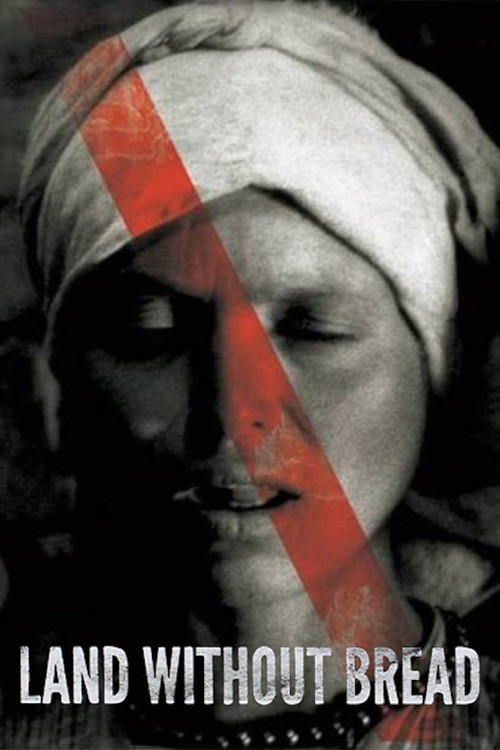
Land Without Bread 1933
Luis Buñuel's stark and provocative Land Without Bread (1933) offers a harrowing glimpse into the forgotten poverty-stricken region of Las Hurdes in Spain's Extremadura.
Director: Luis Buñuel
Cast

Francisco Rabal
Narrator (voice)
Frequently Asked Questions
What is Land Without Bread (1933) about?
The film delves into the harsh realities of life in Las Hurdes, a poverty-stricken Spanish region in the 1930s. It captures the struggles of a community grappling with disease, isolation, and the forced emigration of its youth, painting a stark picture of survival in one of Europe's most neglected areas.
Who directed Land Without Bread?
Land Without Bread was directed by the legendary Luis Buñuel, a pioneering Spanish filmmaker known for his surrealist and provocative works that challenged societal norms.
Who stars in Land Without Bread?
The film features Francisco Rabal, though it primarily focuses on the real-life inhabitants of Las Hurdes rather than traditional actors.
Is Land Without Bread (1933) worth watching?
While Land Without Bread is a challenging watch due to its unflinching portrayal of poverty, it remains a historically significant documentary. Fans of Buñuel's work or early cinema will appreciate its raw honesty and artistic boldness, though its bleak tone may not appeal to all viewers.
How long is Land Without Bread?
Land Without Bread runs for approximately 29 minutes.
🎥 Trailer
About Land Without Bread (1933) — Buñuel's Haunting Portrait of Poverty and Isolation
Luis Buñuel's stark and provocative Land Without Bread (1933) offers a harrowing glimpse into the forgotten poverty-stricken region of Las Hurdes in Spain's Extremadura. Through deliberate staging and unflinching realism, the director exposes the brutal daily struggles of a community ravaged by disease, hunger, and isolation in the early 20th century. The film weaves together scenes of desolation—emigration, abandoned villages, and the crushing weight of tradition—as it documents a forgotten corner of Europe where survival was a daily battle. Buñuel's controversial approach challenged audiences to confront uncomfortable truths about social inequality while immersing them in an atmosphere that blends documentary realism with cinematic artistry.
Often dismissed as mere propaganda, Land Without Bread transcends its time to become a haunting meditation on human resilience and societal neglect. The film's raw portrayal of hardship, framed by Buñuel's signature provocative perspective, forces viewers to question the boundaries between fact and fiction in early cinema. With its unrelenting honesty and stark visuals, this short yet impactful documentary remains a pivotal work in the Spanish filmmaker's oeuvre and a sobering reminder of the enduring consequences of poverty.