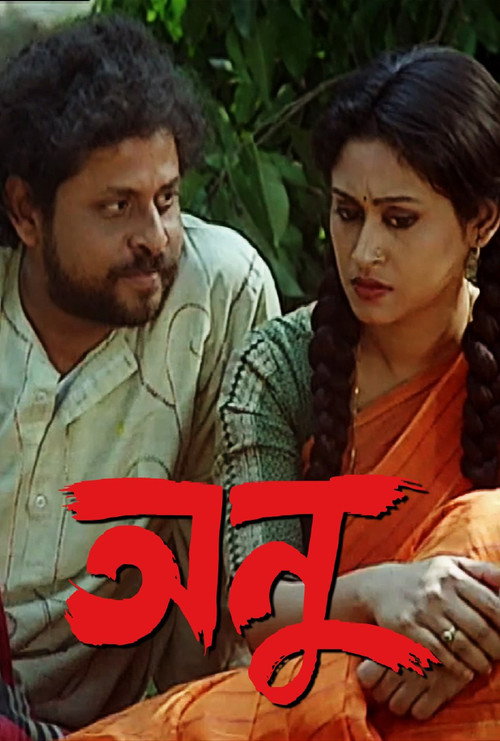
Anu 1998
"Political romance"
Set against the backdrop of mid-90s Bengal, *Anu (1998)* weaves a tender yet politically charged romance around a young woman caught between personal dreams and revolutionary ideals.
Director: Satarupa Sanyal
Cast





Frequently Asked Questions
What is Anu (1998) about?
*Anu (1998)* is a romantic drama that follows Anu, a middle-class woman who falls for Sugawto, a fiery political activist. Their relationship is tested when Sugawto is jailed, revealing the disconnect between personal emotions and his unwavering dedication to revolution. As Anu struggles to find her place in his world, the film asks whether love can survive when ideology takes precedence.
Who directed Anu?
Anu was directed by Satarupa Sanyal, a filmmaker known for her evocative storytelling and nuanced exploration of human relationships.
Who stars in Anu?
The cast features Debesh Roy Chowdhury, Indrani Haldar, Kharaj Mukherjee, Monu Mukherjee, and Nirmalya Banerjee in pivotal roles.
Is Anu (1998) worth watching?
While *Anu (1998)* unrated on IMDb, its heartfelt portrayal of love and political struggle offers a compelling watch for fans of offbeat romances. The film's poetic realism and strong performances make it a memorable experience, especially for those drawn to stories that blend personal and social themes.
How long is Anu?
Anu has a runtime of 120 minutes (2 hours).
About Anu (1998) — A Political Romance of Love, Ideals, and Sacrifice
Set against the backdrop of mid-90s Bengal, *Anu (1998)* weaves a tender yet politically charged romance around a young woman caught between personal dreams and revolutionary ideals. Directed by Satarupa Sanyal, the film follows Anu, a gentle-hearted middle-class girl whose life takes a dramatic turn when she falls for Sugawto, a passionate political activist. Their love story unfolds in the shadow of Sugawto's arrest, forcing Anu to confront the harsh reality of his devotion to a cause that leaves no room for personal attachments. As she grapples with her own identity and desires, the question lingers: will she remain an afterthought in his grand vision, or will love finally break through the ideological walls?
Sanyal's direction infuses the narrative with a poetic melancholy, balancing intimate character moments with the gritty energy of political unrest. The film explores themes of sacrifice, agency, and the blurred lines between love and ideology, all wrapped in a dreamlike atmosphere that lingers long after the credits roll. With its raw emotional depth and socially resonant storytelling, *Anu (1998)* stands as a poignant reflection on love's resilience in the face of political turmoil.