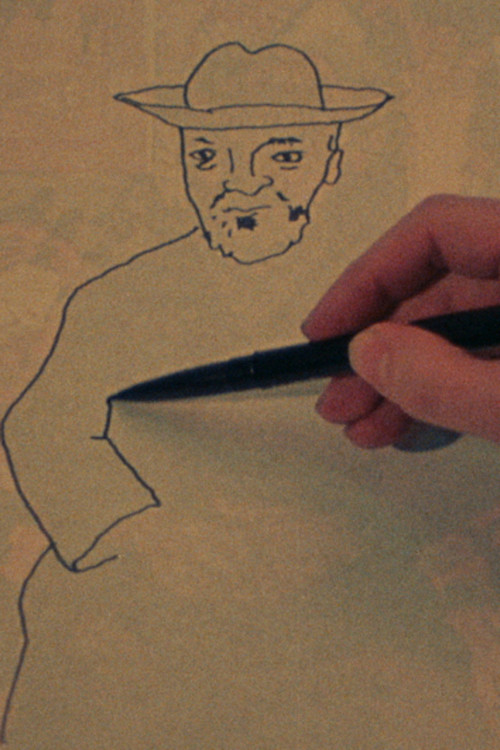
The Portrait of Père Tanguy 1974
In Jack Goldstein's 1974 experimental short *The Portrait of Père Tanguy*, the artist traces a reproduction of Vincent van Gogh's iconic 1887 portrait, weaving together repetition and erasure into a meditation on identity and presence.
Director: Jack Goldstein
Frequently Asked Questions
What is The Portrait of Père Tanguy (1974) about?
This 1974 experimental film by Jack Goldstein follows the artist tracing a reproduction of Vincent van Gogh's *Portrait of Père Tanguy*, examining how repetition and erasure blur the line between creator and creation. The five-minute work questions the stability of the self when an artist's presence is both asserted and dissolved.
Who directed The Portrait of Père Tanguy?
The film was directed by Jack Goldstein, an American artist known for his pioneering work in conceptual and minimalist art during the 1970s.
Who stars in The Portrait of Père Tanguy?
Cast information for *The Portrait of Père Tanguy* is not publicly available.
Is The Portrait of Père Tanguy (1974) worth watching?
As an avant-garde short with a runtime of just five minutes, *The Portrait of Père Tanguy* offers a thought-provoking experience for fans of experimental cinema. Its conceptual depth and visual restraint make it a niche but rewarding watch for those interested in art films and philosophical inquiry.
How long is The Portrait of Père Tanguy?
The runtime of *The Portrait of Père Tanguy* is five minutes.
About The Portrait of Père Tanguy (1974) — A haunting 5-minute exploration of art, identity, and erasure
In Jack Goldstein's 1974 experimental short *The Portrait of Père Tanguy*, the artist traces a reproduction of Vincent van Gogh's iconic 1887 portrait, weaving together repetition and erasure into a meditation on identity and presence. The film unfolds with quiet intensity as Goldstein's hand presses against tracing paper, each mark both affirming his existence and subtly dissolving the boundaries between original and copy. This fleeting five-minute work transcends mere homage, instead probing the fragile relationship between the self and its representations, leaving viewers to ponder what remains when an artist's hand is both visible and invisible.
Goldstein's approach transforms a simple act into a philosophical inquiry, blending minimalist execution with layered conceptual depth. The flickering interplay of transparency and opacity mirrors the tension between memory and creation, evoking the ghostly afterimages of both the artist and the subject. *The Portrait of Père Tanguy* (1974) lingers as a haunting experiment in visual rhetoric, where the act of tracing becomes a metaphor for the elusive nature of truth in art.