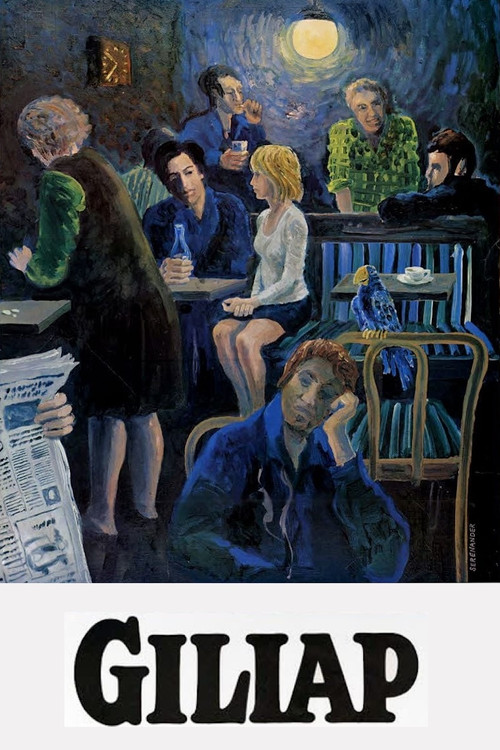
Giliap 1975
Swedish auteur Roy Andersson's *Giliap (1975)* unfolds in a bleak, rain-soaked town where the air itself feels thick with frustration.
Director: Roy Andersson
Cast





Frequently Asked Questions
What is Giliap (1975) about?
Set in a drab Swedish town, *Giliap* follows a trio of disillusioned restaurant workers whose shaky camaraderie leads to a disastrous attempt to spring a prisoner from police custody. Through Roy Andersson's unflinching lens, the story becomes a meditation on futility, power, and the quiet desperation of lives stuck in neutral.
Who directed Giliap?
Roy Andersson, the Swedish filmmaker celebrated for his stark visual style and emotionally raw storytelling, helmed *Giliap* with a keen eye for the absurd and the melancholic.
Who stars in Giliap?
Thommy Berggren leads the ensemble as the unnamed waiter, joined by Mona Seilitz as Anna and Willie Andréason as the manipulative 'Count'.
Is Giliap (1975) worth watching?
Though unrated and far from mainstream, *Giliap* offers a compelling snapshot of 1970s Scandinavian cinema, weaving crime and drama into a quietly devastating character study. Fans of Andersson's later, more polished works will find its raw edges intriguing, while casual viewers may find its pacing a tough sell.
How long is Giliap?
The film runs 130 minutes—just over two hours of moody, methodical storytelling.
About Giliap (1975) — A Swedish Crime-Drama Unpacking Desperation and Failed Schemes
Swedish auteur Roy Andersson's *Giliap (1975)* unfolds in a bleak, rain-soaked town where the air itself feels thick with frustration. At its heart, this moody crime-drama tracks three lost souls: a taciturn waiter known only as W, his sharp-eyed coworker Anna, and a scheming dishwasher who christens himself "the Count"—a man who's mastered the art of manipulation. Their uneasy alliance spirals into chaos when a botched jailbreak, dreamed up in the restaurant's backroom, crashes headlong into the cold machinery of local law enforcement. Shot through with Andersson's signature blend of stark realism and quiet despair, the film strips away glamour to expose the brittle relationships and dead-end dreams lurking beneath everyday surfaces.
The atmosphere is oppressive yet sharply observed, each frame packed with the unspoken tensions of people trapped by circumstance. While the plot stumbles forward with the fumbling logic of a half-baked heist, what lingers is the portrait of human frailty—how pride, loneliness, and a misplaced belief in destiny can curdle into something far darker than mere bad luck.