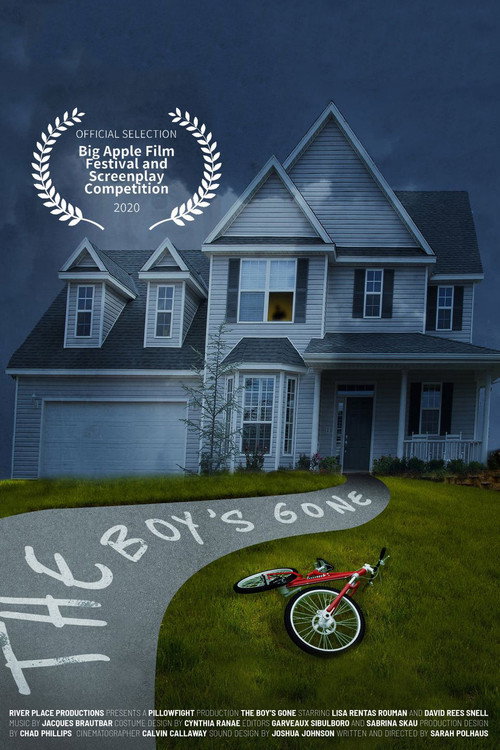
The Boy's Gone 2020
In Sarah Polhaus' haunting drama *The Boy's Gone* (2020), a once-vibrant family unravels in the wake of unimaginable loss.
Director: Sarah Polhaus
Cast


Frequently Asked Questions
What is The Boy's Gone (2020) about?
This 17-minute drama follows a couple whose marriage crumbles after the loss of their son, with each parent coping in extreme, opposing ways. As their grief spirals into paranoia, they uncover unsettling truths about their relationship and the tragedy itself.
Who directed The Boy's Gone?
Sarah Polhaus helmed *The Boy's Gone*, crafting a tense, intimate short film that lingers on the edges of emotional devastation.
Who stars in The Boy's Gone?
The film features Lisa Roumain and David Rees Snell in the lead roles, alongside Leslie Thurston, Sally Shore, and Noah Odegaard.
Is The Boy's Gone (2020) worth watching?
For fans of raw, character-driven dramas, *The Boy's Gone* (2020) delivers a punchy, impactful story despite its brief runtime. Its exploration of grief's complexities—without easy answers—makes it a memorable, if heavy, watch.
How long is The Boy's Gone?
The Boy's Gone runs for 17 minutes.
About The Boy's Gone (2020) — A Heartbreaking Short on Grief and Hidden Truths
In Sarah Polhaus' haunting drama *The Boy's Gone* (2020), a once-vibrant family unravels in the wake of unimaginable loss. When a couple grapples with the sudden absence of their young son, their grief fractures in opposing directions—one retreating into silence, the other drowning in despair. What begins as a shared tragedy slowly curdles into something far more sinister, revealing hidden fissures in their marriage and the unsettling secrets lurking beneath the surface. With its stark intensity and emotional weight, this 17-minute film lingers like a shadow, exploring how love and pain can distort even the most familiar bonds.
Starring Lisa Roumain and David Rees Snell as the bereaved parents, *The Boy's Gone* (2020) is a visceral meditation on sorrow's quiet devastation. Directed by Polhaus, the short film weaves a slow-burning tension between raw emotion and psychological unease, leaving audiences to question what's real—and who might be hiding the truth. The minimalist setting amplifies the claustrophobic atmosphere, making every exchanged glance or unspoken word feel charged with something darker than grief alone.