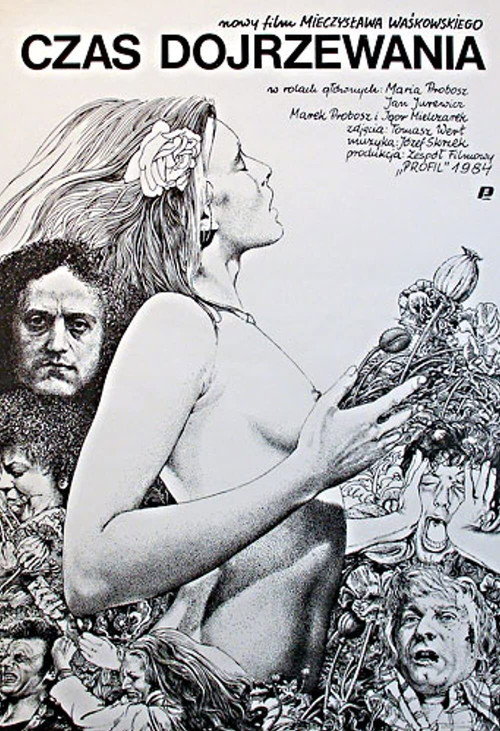
Czas dojrzewania 1984
Set against the gritty backdrop of 1980s Poland, *Czas dojrzewania (1984)* follows Romek, a shipyard worker who balances hard labor with quiet dreams of modernizing his family's struggling farm.
Director: Mieczysław Waśkowski
Frequently Asked Questions
What is Czas dojrzewania (1984) about?
Romek, a shipyard laborer, dedicates his earnings to modernizing his family's rural farm, but his life takes an unexpected turn when his former girlfriend, Gośka, arrives on his doorstep. Struggling with her own demons, she forces Romek to confront the limits of his generosity—and the depth of his own unresolved past.
Who directed Czas dojrzewania?
Mieczysław Waśkowski directed *Czas dojrzewania*, helming this character-driven drama with a focus on emotional realism.
Who stars in Czas dojrzewania?
Cast details for *Czas dojrzewania* are not fully documented, but the film centers on its lead actors who bring Romek and Gośka's struggles to life.
Is Czas dojrzewania (1984) worth watching?
As a Polish drama rooted in social realism, *Czas dojrzewania* offers a poignant look at personal growth and hardship. While not widely acclaimed, its themes of duty and redemption may resonate with fans of character-driven cinema.
How long is Czas dojrzewania?
*Czas dojrzewania* runs for 92 minutes.
About Czas dojrzewania (1984) — A Polish drama of love, duty, and second chances
Set against the gritty backdrop of 1980s Poland, *Czas dojrzewania (1984)* follows Romek, a shipyard worker who balances hard labor with quiet dreams of modernizing his family's struggling farm. When his past collides in the form of Gośka—a young woman who fled rural life for the chaos of the city—Romek faces a crisis of responsibility and heart. Director Mieczysław Waśkowski crafts a raw, emotional drama that explores the tension between duty and desire, where love and redemption intertwine against the struggles of post-war society.
The film unfolds with a stark realism, painting a portrait of resilience and second chances. Waśkowski's direction emphasizes quiet moments over sweeping gestures, immersing viewers in a world where choices echo louder than words. Whether it's the weight of family expectations or the pull of personal demons, *Czas dojrzewania* captures the fragile balance between growth and stagnation, leaving a lasting impression of compassion and complexity.