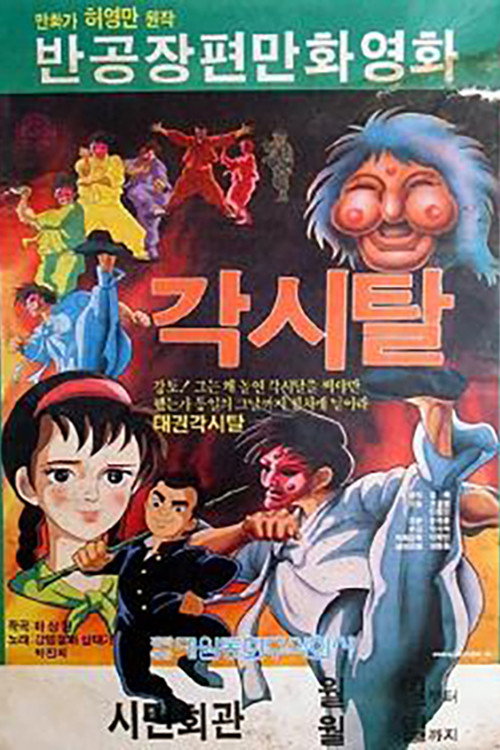
Gaksital 1986
Gaksital (1986) is a rare North Korean animation steeped in Cold War-era tension, blending action and propaganda with striking visual symbolism.
Frequently Asked Questions
What is Gaksital (1986) about?
Gaksital (1986) is an animated political thriller set in North Korea, where two boys are manipulated into denouncing their brother as a political enemy. Their actions lead to his imprisonment in a labor camp, but they soon discover they've been exploited by forces they trusted. The story unfolds as a cautionary tale about blind obedience and the deceptive nature of power.
Who directed Gaksital?
Director information is not available.
Who stars in Gaksital?
The film features two unnamed protagonists, though their voices and identities remain uncredited in available records. The story relies more on symbolic representation than traditional casting.
Is Gaksital (1986) worth watching?
Despite its 1980s origins and limited availability, Gaksital (1986) offers a compelling curiosity for fans of Cold War cinema and rare North Korean animations. Its unconventional narrative and stark visuals make it a unique watch, though its heavy-handed messaging may not appeal to all viewers. For those interested in political allegories, it's worth seeking out.
How long is Gaksital?
Gaksital (1986) has a runtime of 66 minutes.
About Gaksital (1986) — A Forgotten North Korean Animation of Cold War Intrigue
Gaksital (1986) is a rare North Korean animation steeped in Cold War-era tension, blending action and propaganda with striking visual symbolism. Set against a backdrop of ideological division, the film follows two boys—one indoctrinated in communist doctrine, the other using colorful balloons to send messages to the South—who become unwitting pawns in a sinister scheme. Their collaboration in sending a brother to a brutal labor camp reveals a stark betrayal, uncovering the manipulative forces at play. As the protagonist grapples with disillusionment, the story unfolds as a poignant exploration of trust, propaganda, and the human cost of political extremism. The film's eerie atmosphere and allegorical storytelling make it a curious artifact of its time.
Directed with a haunting, if heavy-handed, approach, Gaksital (1986) stands out for its unconventional perspective on divided societies. The animation's stark contrasts and the recurring motif of the Gaksital mask serve as visual metaphors for deception and hidden truths. While its narrative leans heavily into ideological messaging, the film's subversive undertones and unusual premise offer a fascinating glimpse into North Korean cinema of the 1980s.