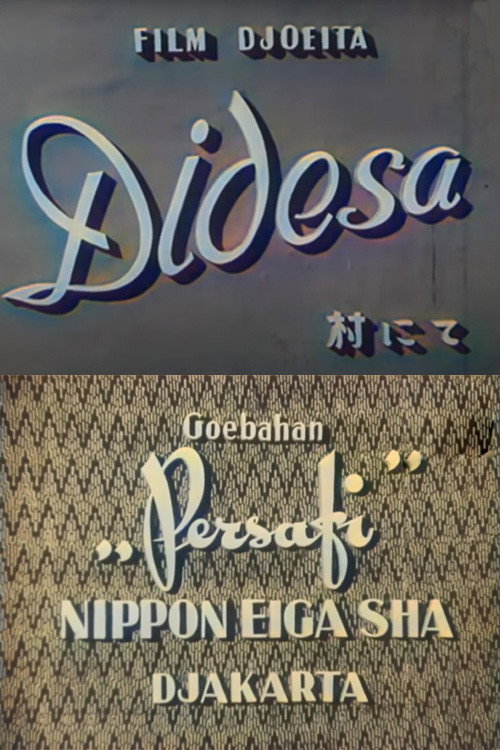
Di Desa 1943
Di Desa (1943) offers a rare glimpse into Indonesia's past during one of its most tumultuous periods.
Director: Rustam Sutan Palindih
Cast
Frequently Asked Questions
What is Di Desa (1943) about?
The film portrays the daily lives of Indonesian villagers during Japanese occupation, showing them as content volunteers serving in the military, working as farmers, planters, and merchants while supporting Japan's war efforts.
Who directed Di Desa?
The film was directed by Rustam Sutan Palindih, a filmmaker working during the Japanese occupation period in Indonesia.
Who stars in Di Desa?
The main cast includes Moh. Mochtar, Eddie T Effendie, Garkiah, Epen, and Endjek, who portray various villagers and their roles in supporting the war effort.
Is Di Desa (1943) worth watching?
While unrated on IMDb, this drama holds historical value for its portrayal of Indonesian life during WWII occupation. Its short runtime and propagandistic themes make it primarily interesting for those studying film history or Indonesian wartime culture.
How long is Di Desa?
The film runs for 27 minutes.
Di Desa (1943): Wartime Indonesian Village Life — Full Details
Di Desa (1943) offers a rare glimpse into Indonesia's past during one of its most tumultuous periods. This short drama film, directed by Rustam Sutan Palindih, presents the daily lives of Indonesian villagers under Japanese military occupation, portraying their roles as voluntary soldiers, farmers, planters, and merchants who willingly support Japan's war effort. Through the performances of Moh. Mochtar, Eddie T Effendie, Garkiah, Epen, and Endjek, the film captures an idealized vision of rural life shaped by wartime propaganda.
The 27-minute runtime focuses on creating an atmosphere of unity and purpose, showing how ordinary people adapted to extraordinary circumstances. While the narrative serves clear propagandistic aims, Di Desa remains historically significant as a document of Indonesia's experience during World War II, reflecting both the period's complexities and the cinematic storytelling of the era. For those interested in Indonesian film history or wartime cultural artifacts, this drama provides valuable insight into early 1940s cinema and the social dynamics of occupied Indonesia.