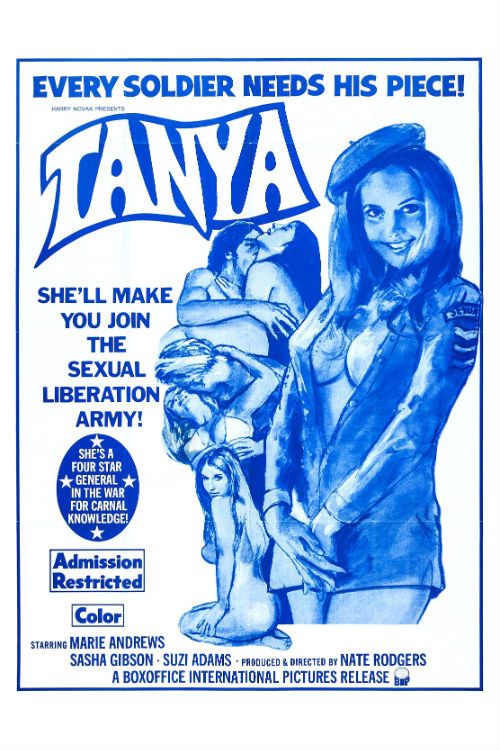
Tanya 1976
Tanya (1976) delivers a provocative blend of drama and dark comedy, directed by Nate Rodgers. The film follows a privileged young woman who, after being abducted by a radical faction, surprisingly chooses to abandon her former life and embrace her captors' revolutionary ideals.
Director: Nate Rodgers
Cast

Frequently Asked Questions
What is Tanya (1976) about?
Tanya tells the story of a wealthy young woman who is kidnapped by a radical group but defies expectations by choosing to join their cause instead of seeking rescue. The film explores her journey of self-reinvention amid social and political unrest.
Who directed Tanya?
Tanya was directed by Nate Rodgers, a filmmaker known for his work in blending drama with sharp social commentary.
Who stars in Tanya?
The film stars Maria Arnold as Tanya, with key performances from B.B. Hinds, Tallie Cochrane, Shani Nyota, and Bobby Russell.
Is Tanya (1976) worth watching?
While Tanya lacks a formal IMDb rating, its intriguing premise and concise runtime make it a niche but memorable watch for fans of 1970s counterculture dramas. The film's bold storytelling and thematic depth set it apart in its genre.
How long is Tanya?
Tanya has a runtime of 79 minutes.
About Tanya (1976) — From Kidnapped Heiress to Revolutionary Icon
Tanya (1976) delivers a provocative blend of drama and dark comedy, directed by Nate Rodgers. The film follows a privileged young woman who, after being abducted by a radical faction, surprisingly chooses to abandon her former life and embrace her captors' revolutionary ideals. Set against a backdrop of social upheaval, the story explores themes of identity, privilege, and the unexpected paths people take in pursuit of meaning. The atmosphere balances tension with irony, as Tanya's transformation unfolds in a world where conventional roles are turned on their head.
With a runtime under 80 minutes, Tanya is a concise yet thought-provoking cinematic experience. Maria Arnold stars in the title role, supported by a compelling ensemble including B.B. Hinds and Tallie Cochrane. The film's sharp script and bold premise make it a standout in 1970s counterculture cinema, offering a fresh perspective on rebellion and self-discovery.