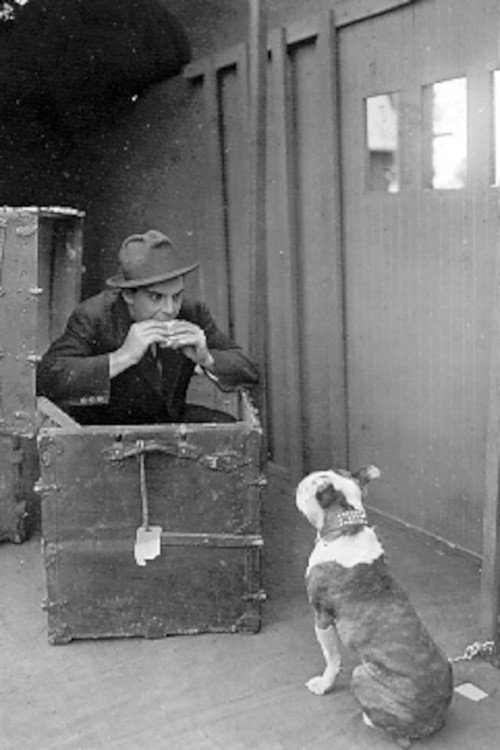
The Dog in the Baggage Car 1913
In this delightful 1913 silent comedy short, newlyweds James Cruze and Marguerite Snow find themselves stranded when their traveling manager disappears without paying their fare.
Cast

Frequently Asked Questions
What is The Dog in the Baggage Car (1913) about?
This silent comedy follows a stranded vaudeville couple who resort to an outrageous scheme to travel home. With no money for tickets, the wife ships her husband ahead as luggage in a train's baggage car, sparking a series of comical misadventures.
Who directed The Dog in the Baggage Car?
Director information is not available.
Who stars in The Dog in the Baggage Car?
The film stars James Cruze and Marguerite Snow, a real-life married couple whose on-screen antics mirrored their off-screen partnership.
Is The Dog in the Baggage Car (1913) worth watching?
Though unrated on IMDb, this silent-era comedy offers a rare glimpse into early filmmaking and vaudeville humor. Its 11-minute runtime makes it a quick, entertaining watch for fans of slapstick or silent cinema history.
How long is The Dog in the Baggage Car?
The Dog in the Baggage Car runs for 11 minutes.
About The Dog in the Baggage Car (1913) — A 1913 silent comedy short about love, travel, and a trunk-bound husband
In this delightful 1913 silent comedy short, newlyweds James Cruze and Marguerite Snow find themselves stranded when their traveling manager disappears without paying their fare. With no money left for tickets to New York, Marguerite devises an ingenious plan—she'll ship her husband ahead as "baggage." The couple packs Cruze into a Saratoga trunk, sending him by rail in the baggage car while she follows on foot. The film brims with the playful absurdity of early cinema, blending slapstick humor with the inventive spirit of silent-era storytelling.
The Dog in the Baggage Car (1913) captures the chaotic charm of vaudeville-era farce, where desperation meets creativity in the most unexpected ways. Its themes of frugality, quick thinking, and marital teamwork shine through its lighthearted tone, offering a snapshot of early 20th-century entertainment. Set against the backdrop of train travel—a symbol of both freedom and constraint—the film's atmosphere crackles with energy and wit.