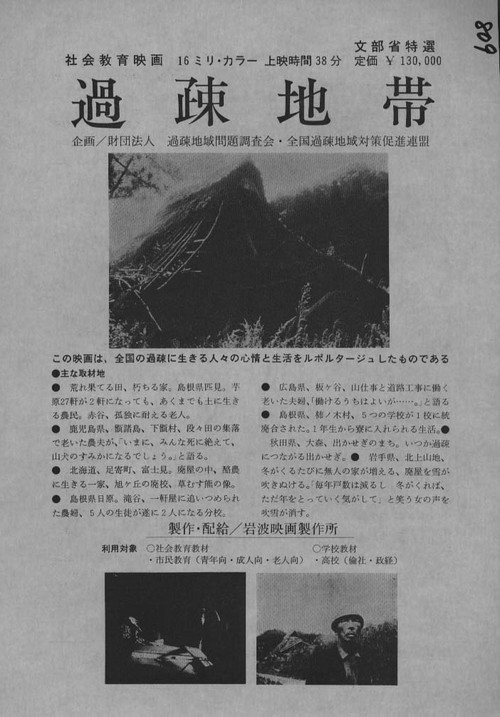
Kaso chitai 1973
Released in 1973 and directed by Shinichi Akiyama, *Kaso chitai* is a sobering documentary that captures Japan's alarming depopulation crisis during the 1960s and 70s.
Director: Shinichi Akiyama
Frequently Asked Questions
What is Kaso chitai (1973) about?
*Kaso chitai* explores the accelerating depopulation of Japan's rural areas during the 1960s–70s, as young people abandoned farming, fishing, and mountain villages for urban opportunities. Through on-the-ground interviews, it documents the collapse of households, the aging of communities, and the cultural erosion left in the wake of high-speed economic growth.
Who directed Kaso chitai?
Shinichi Akiyama directed *Kaso chitai* (1973), crafting a documentary that blends raw realism with sensitive storytelling to spotlight Japan's rural struggles.
Who stars in Kaso chitai?
Director Shinichi Akiyama centers the film on the voices of villagers themselves, including farmers, fishermen, and elders across Hokkaido, Tohoku, and Kyushu.
Is Kaso chitai (1973) worth watching?
*Kaso chitai* is a compelling watch for fans of social documentaries, offering a stark look at Japan's demographic shifts without sensationalism. While not widely rated, its historical and cultural significance makes it a valuable addition to discussions on rural decline and modernization.
How long is Kaso chitai?
The film has a runtime of 40 minutes, making it a concise yet impactful exploration of its themes.
About Kaso chitai (1973) — A haunting documentary on Japan's rural exodus and forgotten communities
Released in 1973 and directed by Shinichi Akiyama, *Kaso chitai* is a sobering documentary that captures Japan's alarming depopulation crisis during the 1960s and 70s. As the nation raced toward economic prosperity, rural communities—particularly in Hokkaido, Tohoku, and Kyushu—faced rapid exodus as younger generations flocked to cities. Through intimate interviews with residents of mountain villages and remote islands, the film reveals the human toll of this shift: aging populations, shuttered households, and fading traditions left in the wake of progress. Shot in black-and-white, the documentary balances stark realism with quiet empathy, offering a poignant snapshot of a Japan on the brink of transformation.
Akiyama's lens doesn't just document decline; it amplifies the voices of those left behind, from fishermen in coastal hamlets to farmers in remote valleys. The result is a haunting meditation on displacement, resilience, and the cost of modernization. Whether viewed as historical record or social commentary, *Kaso chitai (1973)* remains a vital work for understanding Japan's demographic struggles and the quiet collapse of its rural heartland.