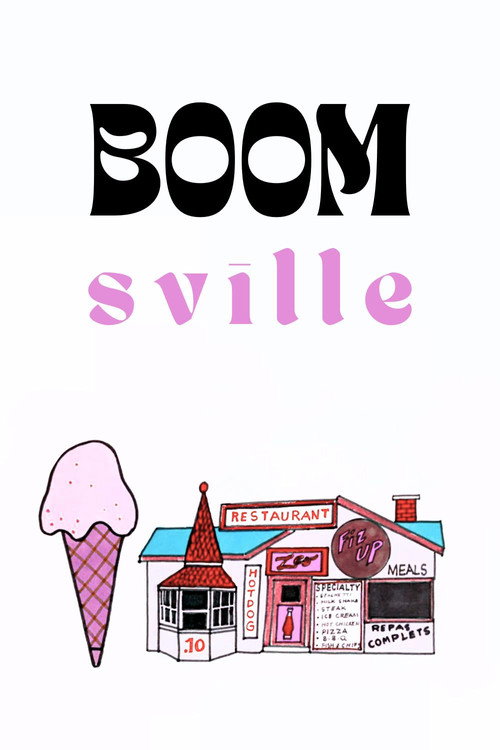
Boomsville 1968
Boomsville (1968) is Yvon Mallette's sharp, wordless cartoon satire that traces the chaotic transformation of a quiet North American town into a sprawling, car-choked urban nightmare.
Director: Yvon Mallette
Frequently Asked Questions
What is Boomsville (1968) about?
This animated short explores how a small North American town evolves from a peaceful settlement into a congested, car-dominated city due to poor planning. Using clever visuals and no dialogue, it highlights the unintended consequences of unchecked urban growth and the erosion of green spaces.
Who directed Boomsville?
Boomsville was directed by Yvon Mallette, a filmmaker known for his innovative approach to animation and social commentary.
Who stars in Boomsville?
Cast information for Boomsville is not listed.
Is Boomsville (1968) worth watching?
As a silent animated satire, Boomsville offers a unique perspective on urbanization that remains relevant decades later. While it may not have the flash of modern CGI films, its clever storytelling and timeless themes make it a rewarding watch for animation and satire enthusiasts.
How long is Boomsville?
The runtime for Boomsville is 10 minutes.
About Boomsville (1968) — A Wordless Cartoon Satire on Urban Sprawl
Boomsville (1968) is Yvon Mallette's sharp, wordless cartoon satire that traces the chaotic transformation of a quiet North American town into a sprawling, car-choked urban nightmare. Through playful animation, the short film skewers unchecked urban sprawl and shortsighted city planning, offering a humorous yet biting commentary on the modern metropolis. Without a single line of dialogue, it paints a vivid picture of progress gone awry, where nature is paved over and convenience reigns supreme. The film's minimalist style and biting irony make it a standout piece of mid-century animation, blending humor with a surprisingly poignant look at the costs of urbanization.
Directed with a keen eye for visual storytelling, Boomsville captures the absurdity of growth without direction. Its stark and witty portrayal of urban decay resonates as much today as it did over half a century ago, making it a cult favorite for fans of social satire and animation alike. The film's unique approach—stripped of words yet rich in meaning—invites viewers to reflect on the landscapes they inhabit and the choices that shape them.