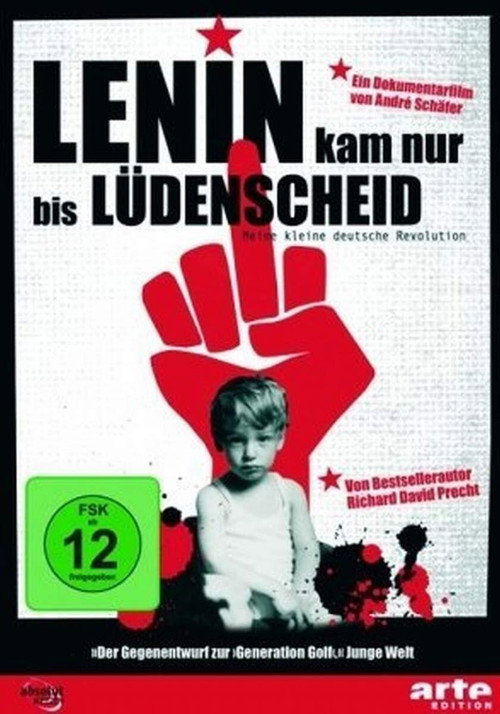
Lenin kam nur bis Lüdenscheid - Meine kleine deutsche Revolution 2008
Dive into *Lenin kam nur bis Lüdenscheid – Meine kleine deutsche Revolution (2008)* for a refreshingly candid look at the '68 student movement through the eyes of a child.
Director: André Schäfer
Frequently Asked Questions
What is Lenin kam nur bis Lüdenscheid - Meine kleine deutsche Revolution (2008) about?
This 2008 documentary offers a child's perspective on the West German '68 movement, blending nostalgic humor with a critical look at revolutionary ideals. It explores how the promise of progress collided with the realities of growing up, framed through personal memories and cultural history.
Who directed Lenin kam nur bis Lüdenscheid - Meine kleine deutsche Revolution?
The film was directed by André Schäfer, known for his evocative documentary style that merges personal narratives with broader social themes.
Who stars in Lenin kam nur bis Lüdenscheid - Meine kleine deutsche Revolution?
Director André Schäfer leads the film, with philosophical commentary provided by Richard David Precht, while the cast includes personal recollections from the director's own childhood.
Is Lenin kam nur bis Lüdenscheid - Meine kleine deutsche Revolution (2008) worth watching?
As a thoughtful, character-driven documentary, it's a compelling watch for those interested in German history and the cultural legacy of the '68 movement. Its unique perspective and engaging style make it stand out in the genre.
How long is Lenin kam nur bis Lüdenscheid - Meine kleine deutsche Revolution?
The documentary runs for 88 minutes.
About Lenin kam nur bis Lüdenscheid - Meine kleine deutsche Revolution (2008) — A documentary on ideology and childhood in West Germany
Dive into *Lenin kam nur bis Lüdenscheid – Meine kleine deutsche Revolution (2008)* for a refreshingly candid look at the '68 student movement through the eyes of a child. Director André Schäfer crafts a playful yet poignant documentary that blends irony and feuilletonism to explore how growing up in West Germany's provinces shaped—and ultimately challenged—progressive ideals. The film captures the tension between ideological fervor and the natural desire to break free, turning a personal childhood narrative into a cultural reckoning with history's unfulfilled promises.
With a sharp, observant lens, Schäfer and philosopher Richard David Precht examine the gap between revolutionary rhetoric and lived reality. The documentary's tone is both lighthearted and reflective, using humor and nostalgia to illuminate the contradictions of the era. Set against the backdrop of the 2008 anniversary of '68, it offers a unique, child's-eye view that feels both intimate and revelatory.