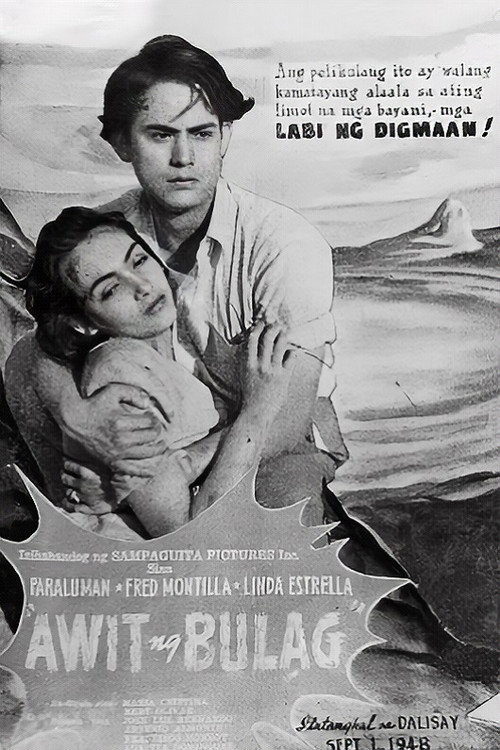
Awit Ng Bulag 1938
Step back into 1938 Philippines with Awit Ng Bulag, a heartfelt drama-romance that shines a light on love's quiet power. Directed by Octavio Silos, this early Filipino film weaves romance and emotional depth into a story that lingers long after the credits roll.
Director: Octavio Silos
Cast




Frequently Asked Questions
What is Awit Ng Bulag (1938) about?
This early Filipino drama-romance follows a story of love tested by circumstance, where a blind protagonist's inner strength reveals truths unseen by others. Set in a nostalgic era, it contrasts personal longing with societal expectations, creating a deeply moving portrait of resilience.
Who directed Awit Ng Bulag?
Awit Ng Bulag was helmed by Octavio Silos, an influential figure in early Philippine cinema known for crafting emotionally resonant narratives.
Who stars in Awit Ng Bulag?
The film features Paraluman, Fred Montilla, Linda Estrella, Delia Razon, and Maria Cristina in lead roles, with Bert Olivar rounding out the ensemble.
Is Awit Ng Bulag (1938) worth watching?
As a historical drama-romance from the late 1930s, Awit Ng Bulag offers a rare glimpse into early Filipino storytelling. While it lacks modern pacing, its thematic depth and cultural significance make it a compelling watch for fans of vintage cinema and classic romance.
How long is Awit Ng Bulag?
Runtime details are not listed for Awit Ng Bulag (1938).
About Awit Ng Bulag (1938) — A 1930s Filipino Romance Drenched in Emotion
Step back into 1938 Philippines with Awit Ng Bulag, a heartfelt drama-romance that shines a light on love's quiet power. Directed by Octavio Silos, this early Filipino film weaves romance and emotional depth into a story that lingers long after the credits roll.
The film stars Paraluman, Fred Montilla, and Linda Estrella in pivotal roles that blend innocence and longing against a backdrop of social contrasts. As the title suggests—meaning 'Song of the Blind'—the narrative unfolds through a poetic lens, exploring themes of perception, sacrifice, and the unspoken bonds that connect people. With a tone that balances melancholy and tenderness, Awit Ng Bulag (1938) captures a bygone era of cinema, where storytelling was both intimate and profound.