Mondfahrt 2001
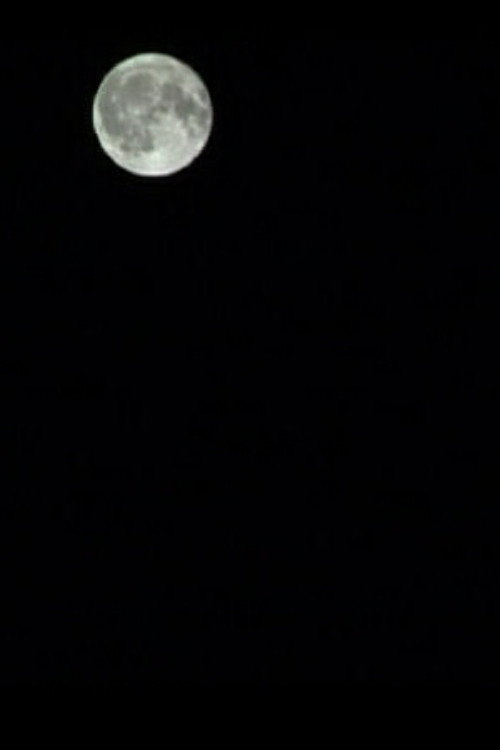
Heike Baranowsky's experimental short film *Mondfahrt* (2001) captures the hypnotic dance of the full moon during a nighttime ferry crossing from Harwich to Hamburg.
Director: Heike Baranowsky
Frequently Asked Questions
What is Mondfahrt (2001) about?
*Mondfahrt* (2001) is a short experimental film that transforms a routine ferry crossing into a meditative visual journey. The camera focuses on the full moon, which appears to dance rhythmically across the frame due to the gentle rocking of the boat, creating a mesmerizing, two-dimensional effect.
Who directed Mondfahrt?
Heike Baranowsky directed *Mondfahrt* (2001). She is known for her experimental and visually striking short films that explore themes of perception and movement.
Who stars in Mondfahrt?
Cast details for *Mondfahrt* (2001) are not listed.
Is Mondfahrt (2001) worth watching?
*Mondfahrt* (2001) is a niche experimental film best suited for fans of avant-garde cinema and visual storytelling. Its brevity and abstract nature make it a unique but polarizing experience—ideal for those who appreciate minimalist, atmospheric works.
How long is Mondfahrt?
The runtime of *Mondfahrt* (2001) is 7 minutes.
About Mondfahrt (2001) — A hypnotic ferry moon captured in black and white
Heike Baranowsky's experimental short film *Mondfahrt* (2001) captures the hypnotic dance of the full moon during a nighttime ferry crossing from Harwich to Hamburg. Shot in striking black and white, Baranowsky steadies her camera to frame the moon as a rhythmic, ball-like disc that shifts with the gentle motion of the waves. The absence of spatial context and the stark contrast between light and shadow flatten the image into a mesmerizing two-dimensional tableau, turning an ordinary voyage into a meditative visual experience. The film plays with perception, transforming a celestial body into a living, breathing entity pulsing to the rhythm of the sea.
A minimalist yet profound work, *Mondfahrt* (2001) distills the essence of travel into a fleeting moment of stillness and motion. Baranowsky's manipulation of framing and perspective turns the mundane into the extraordinary, inviting viewers to lose themselves in the interplay of light, movement, and time.