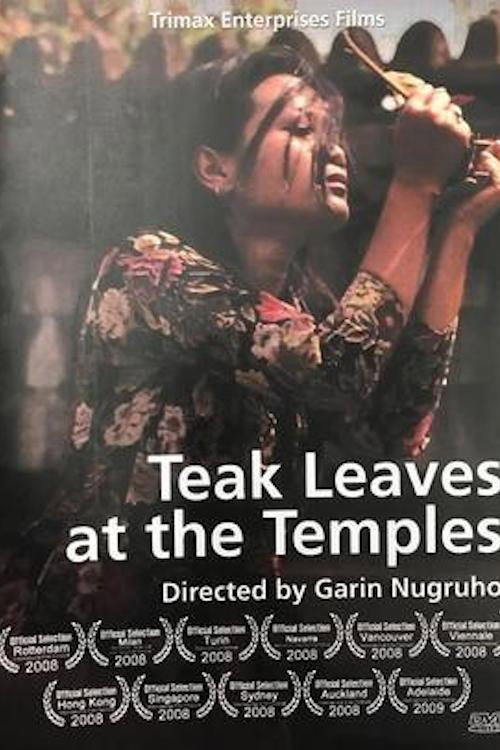
Teak Leaves at the Temples 2008
Immerse yourself in the hypnotic fusion of free jazz and ancient Javanese traditions with *Teak Leaves at the Temples* (2008), directed by the visionary Garin Nugroho.
Director: Garin Nugroho
Frequently Asked Questions
What is *Teak Leaves at the Temples* (2008) about?
This documentary follows a bold musical experiment where Western free-jazz musicians collaborate with Javanese villagers and traditional ensembles near historic temples. The film explores how their improvised music echoes the rhythms of daily life and spiritual heritage.
Who directed *Teak Leaves at the Temples*?
Garin Nugroho, the acclaimed Indonesian filmmaker known for blending cultural storytelling with artistic experimentation.
Who stars in *Teak Leaves at the Temples*?
The film stars free-jazz pioneers Guerino Mazzola (piano), Heinz Geisser (drums), and Norris Jones (bass), alongside the Sono Seni Ensemble and local artists from the Lima Gunung community.
Is *Teak Leaves at the Temples* (2008) worth watching?
Absolutely—for fans of avant-garde cinema and world music. While not widely rated, its unique blend of improvisational jazz and cultural depth makes it a compelling watch for those seeking something beyond conventional narratives.
How long is *Teak Leaves at the Temples*?
The documentary runs for 70 minutes.
Teak Leaves at the Temples (2008): Free Jazz Meets Javanese Temples — Full Info
Immerse yourself in the hypnotic fusion of free jazz and ancient Javanese traditions with *Teak Leaves at the Temples* (2008), directed by the visionary Garin Nugroho. This 70-minute documentary captures a groundbreaking collaboration between Swiss jazz virtuosos Guerino Mazzola (piano) and Heinz Geisser (drums), alongside American bassist Norris Jones, weaving their avant-garde sounds with the rhythms of village life near the sacred Boko, Prambanan, and Borobudur temples.
Nugroho masterfully contrasts the structured chaos of jazz improvisation with the quiet, everyday rituals of the Lima Gunung community, creating a poetic dialogue between art and tradition. The film's visual poetry—shot amid the moss-covered stones and towering spires of these UNESCO World Heritage sites—paints a portrait of cultural harmony, where music becomes a bridge between the spiritual and the mundane. A sensory journey for lovers of experimental cinema and world music.