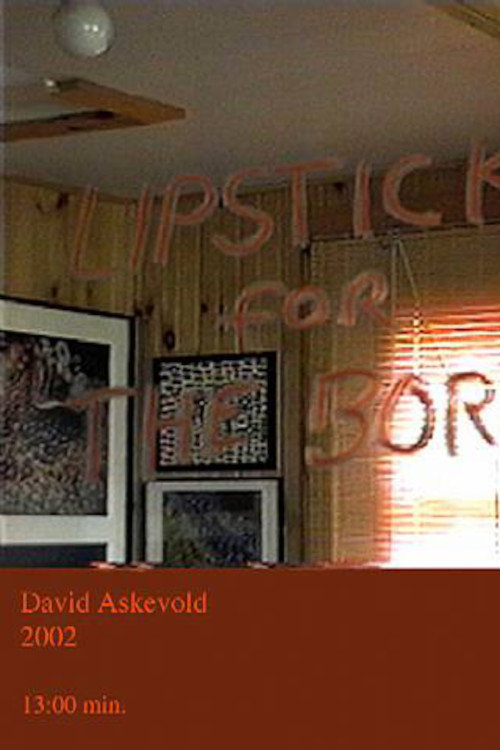
Lipstick for the Border 2002
David Askevold's 2002 short film *Lipstick for the Border* immerses viewers in a hypnotic, disorienting atmosphere where psychological tension simmers beneath every meticulously framed shot.
Director: David Askevold
Frequently Asked Questions
What is Lipstick for the Border (2002) about?
*Lipstick for the Border* is a 13-minute experimental film that explores psychological tension and power dynamics through a visually hypnotic lens. Inspired by Kenneth Anger's *Puce Moment*, it immerses the viewer in a surreal, isolated environment where control and surrender blur, creating a sense of disorientation and unease.
Who directed Lipstick for the Border?
David Askevold directed *Lipstick for the Border*. Known for his experimental approach to filmmaking, Askevold crafted this short film as a psychological exploration of perception and manipulation.
Who stars in Lipstick for the Border?
Cast information for *Lipstick for the Border* is not available.
Is Lipstick for the Border (2002) worth watching?
As an experimental short film, *Lipstick for the Border* offers a unique viewing experience for fans of avant-garde cinema and psychological thrillers. While its niche appeal may not suit all tastes, its atmospheric intensity and visual craftsmanship make it a compelling watch for those exploring the boundaries of the medium.
How long is Lipstick for the Border?
*Lipstick for the Border* has a runtime of 13 minutes.
About Lipstick for the Border (2002) — A hypnotic experimental short film by David Askevold
David Askevold's 2002 short film *Lipstick for the Border* immerses viewers in a hypnotic, disorienting atmosphere where psychological tension simmers beneath every meticulously framed shot. Drawing inspiration from Kenneth Anger's 1949 experimental piece *Puce Moment*, Askevold crafts a visually arresting study of power dynamics, isolation, and the surreal interplay between control and surrender. The 13-minute runtime unfolds like a fever dream, with slow, deliberate camera movements that manipulate the audience into feeling complicit in a quiet yet oppressive scenario. The film's title hints at transformation and transgression, while its aesthetic evokes a drug-induced haze—less about narrative and more about inducing a shared experience of unease and expectation.
Though concise, *Lipstick for the Border* lingers in the mind as a vivid exercise in avant-garde cinema. By stripping away conventional storytelling, Askevold invites audiences to question their own perceptions of autonomy and manipulation, leaving behind a haunting residue of unease that lingers long after the credits roll. Whether viewed as psychological thriller or abstract art, the film stands as a bold experiment in using visual language to evoke emotional states.